// Jargon Buster
What Happens During a MotoGP Pit Stop?
MotoGP pit stops are a fast-paced bike swap, not a tyre change. They happen in 'flag-to-flag' races when the weather changes, and can decide the winner.
Independent fan site — not affiliated with MotoGP or MotoGP Sports Entertainment Group (formerly Dorna). Written by AI from official data and fact-checked: how this article was made.
On this page · 8 sections
What is a pit stop in MotoGP?
A pit stop is when a rider enters the Pit laneThe slow lane beside the track where teams work on the bikes and riders enter and exit.Read the full guide → during a race to change motorcycles.
Unlike many other forms of motorsport you might have watched, a MotoGP pit stop doesn’t involve a frantic crew changing tyres. Instead, the rider pulls in, hops off their bike, and jumps onto a completely different one before rejoining the race. It’s a seamless, athletic, and incredibly fast manoeuvre that is unique to motorcycle racing at this level.
When do pit stops happen?
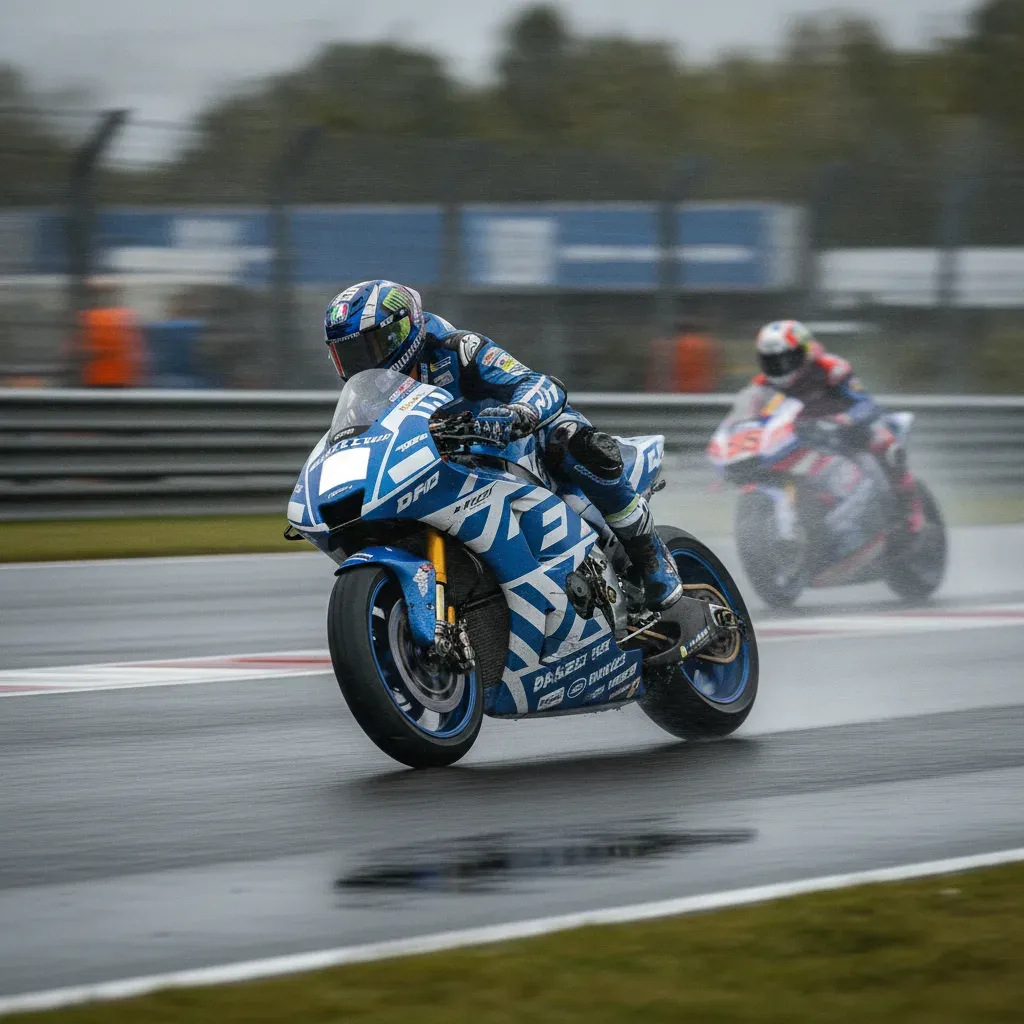
The most common reason for a pit stop is a change in weather. MotoGP races are organised to run in almost all conditions, but the bikes need the right tyres for the job: slick, tread-free tyres for dry asphalt, and treaded wet-weather tyres for rain.
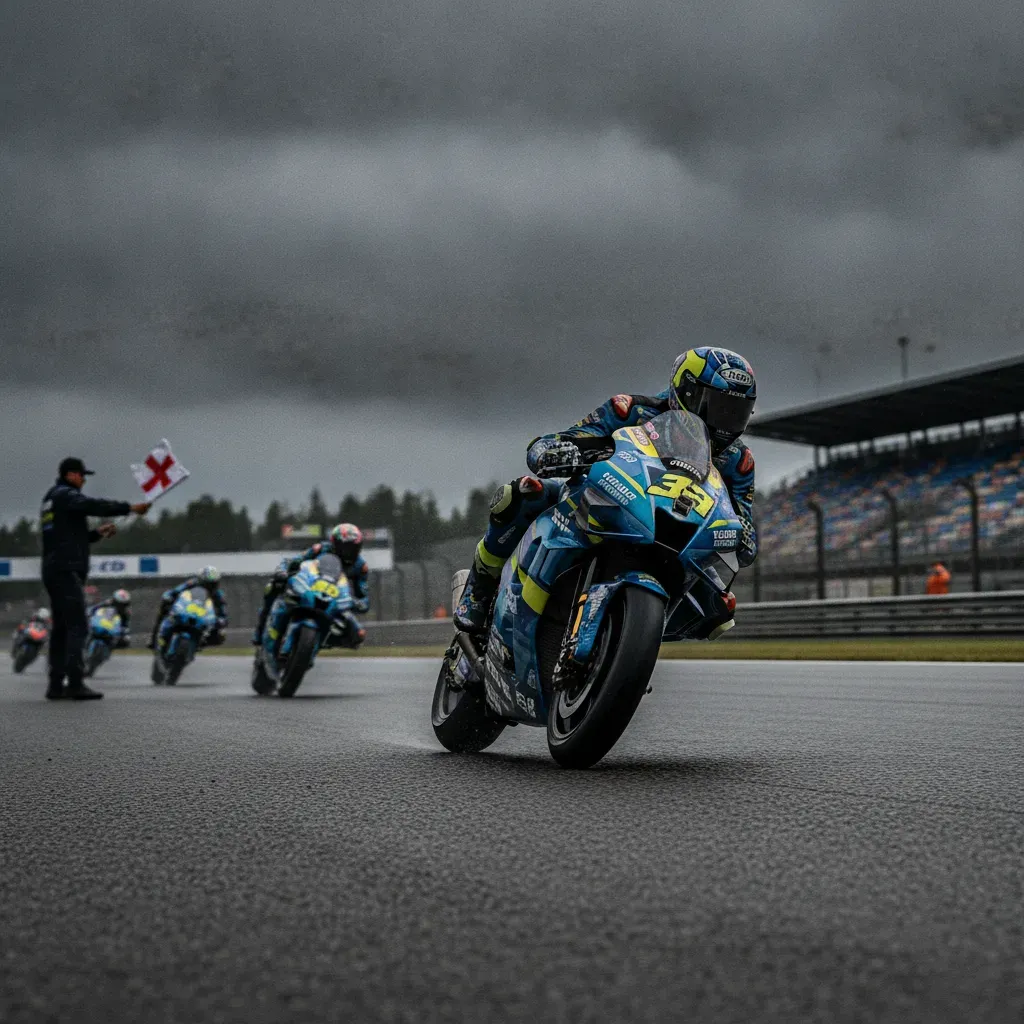
If a race starts dry but it begins to rain, the Race Direction officials will declare it a ‘Flag-to-flagA race where the weather changes and riders pit to switch bikes without the race stopping.Read the full guide →’ race. This is signalled by a White flagA flag signalling that riders may swap to a second bike — usually as rain arrives.Read the full guide →, which tells the riders they are now permitted to enter the pits to swap to their second bike, which will be waiting with wet-weather tyres. (A white flag with a red diagonal cross is a different signal: it simply warns that rain is falling on that part of the track.) The same process happens in reverse if a wet track begins to dry out.
Why don’t they just change the tyres?
This is a common question, especially for fans of four-wheeled racing. The answer comes down to two simple things: time and safety. Changing the wheels on a modern MotoGP bike is a complicated process involving brake calipers, chains, and axles that are not designed for rapid changes.
It would take several minutes to safely change both wheels, which is an eternity in a race. Swapping the entire motorcycle, however, can be done in a matter of seconds. It’s a far quicker, more efficient, and safer solution to get the rider back on track with the right equipment for the conditions.
What does the process look like?
The pit stop is a piece of high-stakes choreography. As the rider enters the pit lane, they must slow down to a strict speed limit (usually 60 km/h) to ensure safety. Their team is already in position, with two mechanics holding the second bike steady.
The rider stops their first bike in a position agreed with the officials before the race, right beside the waiting second bike. They dismount, Sprint raceA short Saturday race over half the distance, awarding points to the top nine finishers.Read the full guide → one or two steps, and swing their leg over. As soon as they are on, a team member whose only job is to watch for traffic releases them, and only when their path into the ‘fast lane’ of the pits is clear.
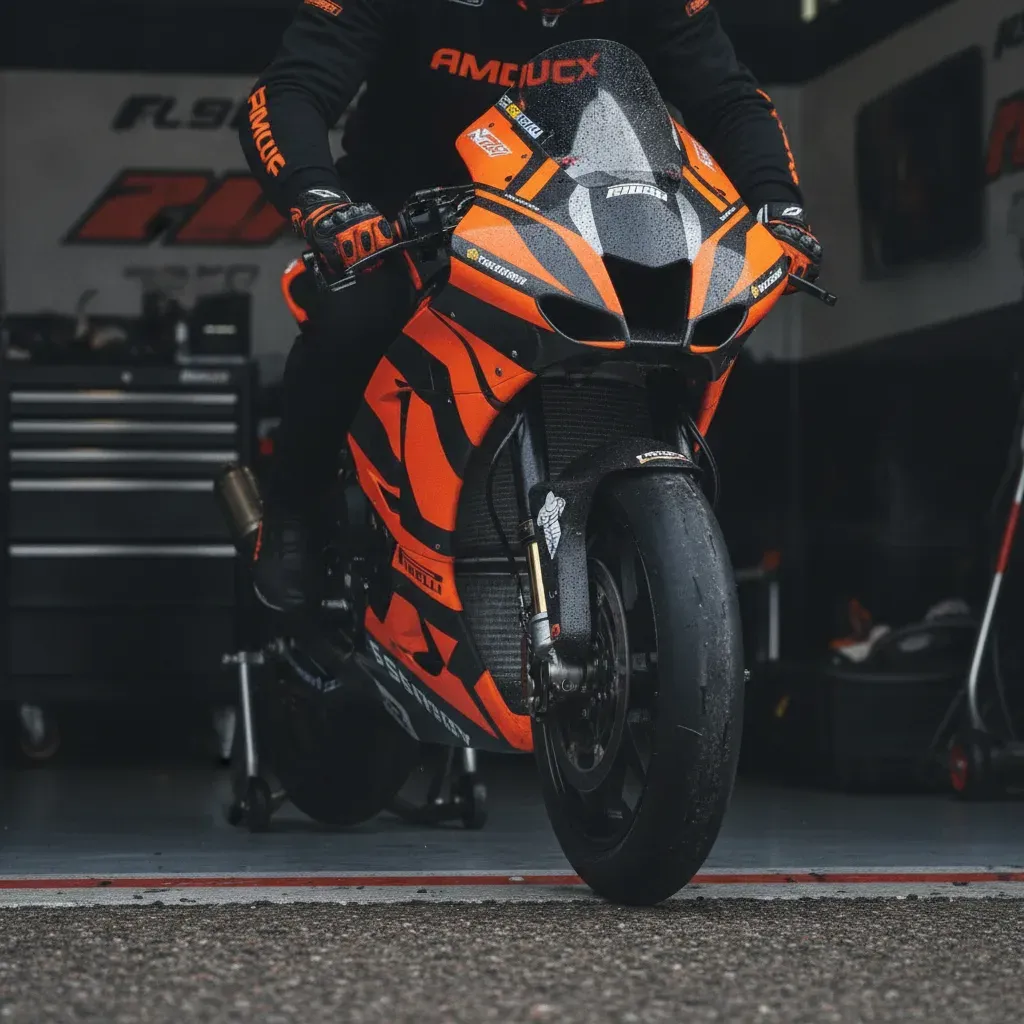
The entire swap is an explosive burst of energy from both the rider and the team. A perfect stop is over almost before you’ve had time to register what happened, with the bike roaring back out of the garage and down the pit lane.
How can a pit stop decide a race?
Strategy is everything. The decision of when to pit is just as important as the execution of the stop itself. A rider and their team must make a crucial judgement call on the weather.
Come in a lap too early, and you might struggle on Wet tyresGrooved tyres that channel water away so the bike can grip a wet track.Read the full guide → if the rain holds off, losing valuable time. Come in a lap too late, and you risk a crash on Slick tyresCompletely smooth dry-weather tyres — no tread, so the maximum amount of rubber touches the track for grip.Read the full guide → on a wet track, or you could lose many seconds to rivals who have already switched. A fumbled bike swap or a penalty for speeding in the pit lane can completely ruin a rider’s race.
Conversely, a perfectly timed stop can be a race-winning move. A brave rider who pits at the exact right moment can make up huge amounts of time and leapfrog several competitors, turning a mid-pack position into a fight for the podium.
Are there other reasons for a pit stop?
While flag-to-flag conditions are the main reason, a rider might occasionally enter the pits for other reasons. A technical problem in a dry race can’t be solved with a bike swap, because riders may only change bikes in a flag-to-flag race, so it usually means retirement.
You will also see riders enter the pit lane to serve a penalty, such as a ‘ride-through’. This involves riding the length of the pit lane at the speed limit without stopping, as a punishment for an on-track infringement. While it uses the pit lane, it isn’t a pit stop in the traditional sense.
Quick Takeaways
- MotoGP pit stops involve swapping the entire motorcycle, not just changing tyres.
- They primarily happen during ‘flag-to-flag’ races when weather conditions change from wet to dry, or vice versa.
- The timing and execution of the bike swap are critical strategic elements that can win or lose a race.
- Swapping bikes is much faster and safer than attempting to change wheels on a motorcycle during a race.
Quick questions
- Q.Do MotoGP riders change tyres in a pit stop?
- No, they swap the entire motorcycle. The second bike is already prepared with the correct tyres for the new weather conditions.
- Q.What is a 'flag-to-flag' race?
- It's a race where the weather changes (e.g., from dry to wet), allowing riders to enter the pits to change bikes without the race being stopped.
- Q.Why is swapping bikes faster than changing tyres?
- Motorcycle wheels are complex to change quickly due to the brakes, chain, and axles. Swapping the whole bike takes just a few seconds, while a tyre change would take minutes.
- Q.Is there a speed limit in the pit lane?
- Yes, riders must stick to a strict speed limit, usually 60 km/h (about 37 mph), in the pit lane. Exceeding it results in a penalty.