// Jargon Buster
What is a Chicane in MotoGP?
A chicane is a sequence of tight, alternating corners on a racetrack. It's designed to slow bikes down for safety and is a key spot for overtaking.
Independent fan site — not affiliated with MotoGP or MotoGP Sports Entertainment Group (formerly Dorna). Written by AI from official data and fact-checked: how this article was made.
On this page · 8 sections
Chicane: A sequence of tight, alternating corners on a racetrack.
If you’re new to MotoGP, you’ll hear the commentators mention the word ‘chicane’ in almost every race. It’s one of the most common and important features of a modern circuit, a place where races can be won and lost in the blink of an eye.
When will I hear this term?
You will hear ‘chicane’ used constantly during commentary, especially when describing a battle between riders. Announcers will talk about a rider being “good through the chicane” or “making a mistake on the entry to the chicane”.
It’s a fundamental piece of track vocabulary used to describe a specific, man-made feature designed to alter the natural flow of the circuit. Understanding what it is and why it’s there is key to understanding race strategy.
Why are chicanes added to circuits?
The number one reason is safety. Many circuits, especially older ones, were originally designed with long, incredibly fast straights. As bikes became more powerful and reached higher Top speedThe fastest a bike goes on a lap, reached at the end of the longest straight — around 350 km/h or more at the quickest circuits.Read the full guide →, these straights became increasingly dangerous.
A chicane is the most common solution. By inserting a tight left-right or right-left sequence of corners, track designers force riders to brake heavily and navigate the section at a much lower speed. This effectively ‘breaks up’ a long straight, reducing the overall top speed and making the track safer for everyone.
What does a chicane look like?
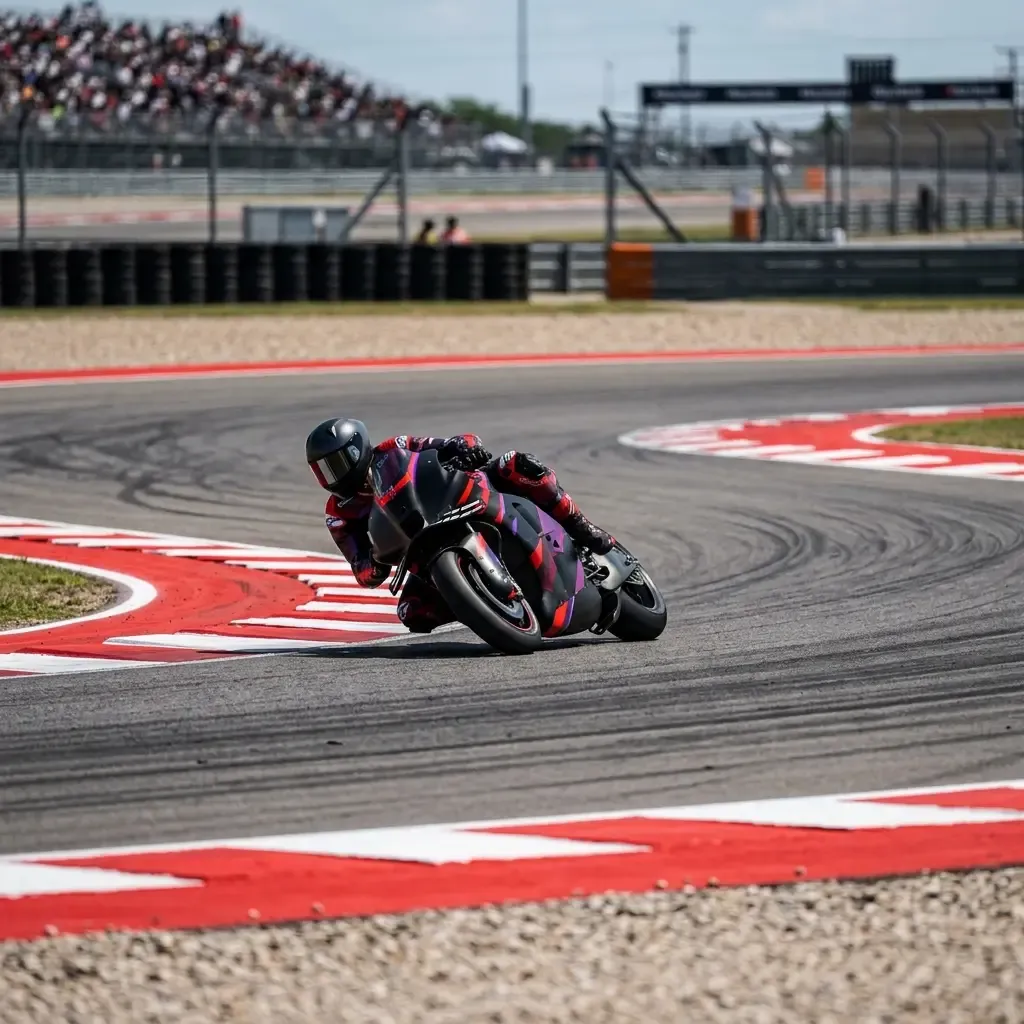
Visually, a chicane is a classic ‘S’ shape laid out on the tarmac. Imagine a straight road, and then a sudden, sharp deviation to the right followed immediately by a sharp deviation to the left to rejoin the original line. That’s a chicane.
They can vary in character. Some are very slow and tight, requiring first-gear negotiation and immense precision. Others are faster and more flowing, where riders flick the bike from one side to the other at high speed. The key element is always the rapid change of direction.
How do riders tackle a chicane?
With incredible skill. A chicane is a huge test of a rider’s ability to brake, turn, and accelerate in a very short space of time. The bike’s behaviour has to be perfect, as it is unsettled by the heavy braking and then thrown from one side to the other.
The rider has to pick a precise line. Getting the entry to the first part of the chicane right is critical, as it sets you up for the second part. A small mistake at the start, like braking a metre too late, will ruin your line through the entire sequence, costing you vital tenths of a second on your lap time.
This rapid ‘flick’ from one Lean angleHow far the bike is tipped from vertical through a corner — MotoGP riders pass 60°.Read the full guide → to the opposite is one of the most physically demanding actions for a rider, requiring huge core and upper body strength. It’s a violent, aggressive manoeuvre that looks spectacular on television.
Why are they so important for racing?
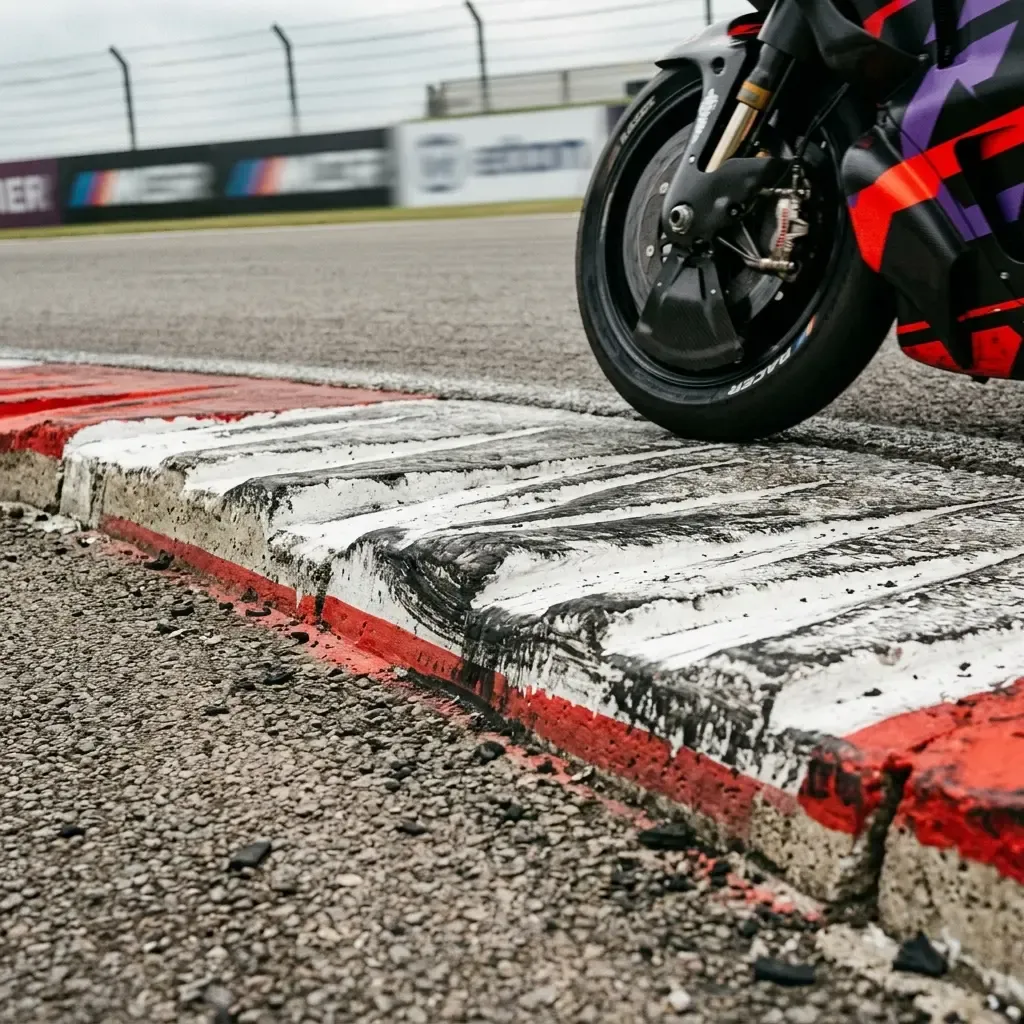
Because they create action. The heavy braking zone on the entry to a chicane is a prime overtaking opportunity. A brave rider can brake later than their rival and dive up the inside to steal the position before the first corner.
They also create strategic battles. A rider who is faster through the chicane might be able to get a much better ‘drive’ (the term for acceleration) onto the following straight. This allows them to use their superior exit speed to pull alongside and pass their opponent, even if they were behind entering the chicane itself.
Famous circuits have chicanes that are legendary for producing last-lap drama. The final chicane at Assen in the Netherlands, for example, has been the site of countless historic, race-deciding moves over the decades.
Are all chicanes the same?
Not at all. Some chicanes are very slow, tight, first-gear corners at the end of a long straight. Those are a pure test of braking power and precision.
Others are faster, more flowing sequences that test the bike’s agility and the rider’s ability to carry momentum from one direction change into the next. Each chicane has its own unique character and challenge.
Quick Takeaways
- A chicane is a tight, S-shaped series of corners designed to slow riders down.
- Their primary purpose is to improve safety by breaking up long, fast straights.
- Navigating a chicane requires immense rider skill in braking and changing direction quickly.
- The heavy braking zones before chicanes make them a hotspot for overtaking and race action.
Quick questions
- Q.Why is it called a 'chicane'?
- The word comes from the French verb 'chicaner', which means 'to create difficulties'. The track feature is designed to create a deliberate difficulty for riders, forcing them to slow down.
- Q.Do riders like chicanes?
- Opinions vary. Some riders love the technical challenge and overtaking opportunities they present, while others prefer faster, more flowing corners. However, all riders appreciate their role in improving safety on high-speed circuits.
- Q.Can you lose a race in a chicane?
- Absolutely. A small mistake on entry can ruin a rider's line, slow their exit, and allow a rival to pass. Many races have been decided by a last-lap battle in a final chicane.
- Q.What's the difference between a chicane and an 'esses'?
- They are very similar. 'Esses' (like the letter 'S') usually refers to a faster, more flowing series of alternating corners, whereas a 'chicane' is typically a tighter, slower sequence designed specifically and deliberately to reduce speed.