Jargon Buster
The White Flag in MotoGP: What it Means
Confused by the white flag in MotoGP? Our jargon-free guide explains what it means, why it starts a ‘flag-to-flag’ race, and how it impacts rider strategy.
Independent fan site — not affiliated with MotoGP or MotoGP Sports Entertainment Group (formerly Dorna).
When the Weather Turns, The Strategy Begins
Picture the scene: it’s a beautiful Sunday at the track. The sun is shining, the race is underway, and the riders are battling fiercely on tyres designed for dry, grippy tarmac. Then, dark clouds roll in, and a few drops of rain begin to fall. Suddenly, trackside officials, known as marshals, begin to wave a simple white flag. What does it mean?
In many other motorsports, a white flag might signal the final lap or a slow-moving vehicle ahead. In MotoGP, however, it has a very specific and dramatic meaning. It’s a signal that the race conditions have changed, and a whole new layer of strategy is about to unfold.
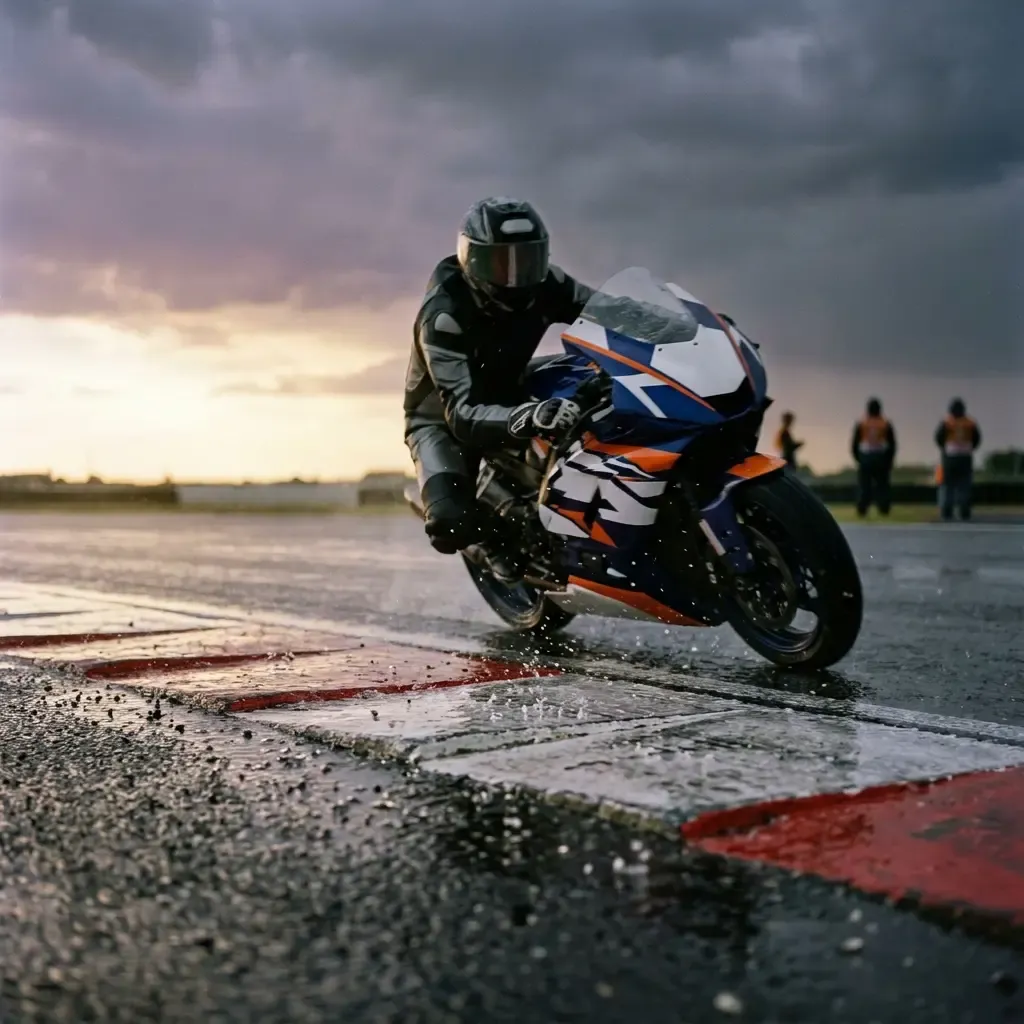
Jargon Buster: The White Flag
The White Flag: A signal that officially allows riders to enter the pit lane and switch to their spare motorcycle.
Think of the white flag as a permission slip. It doesn’t stop the race or mean anyone is surrendering. It simply tells the riders and their teams, “The conditions have changed enough that you are now permitted to come in and change bikes if you choose to.”
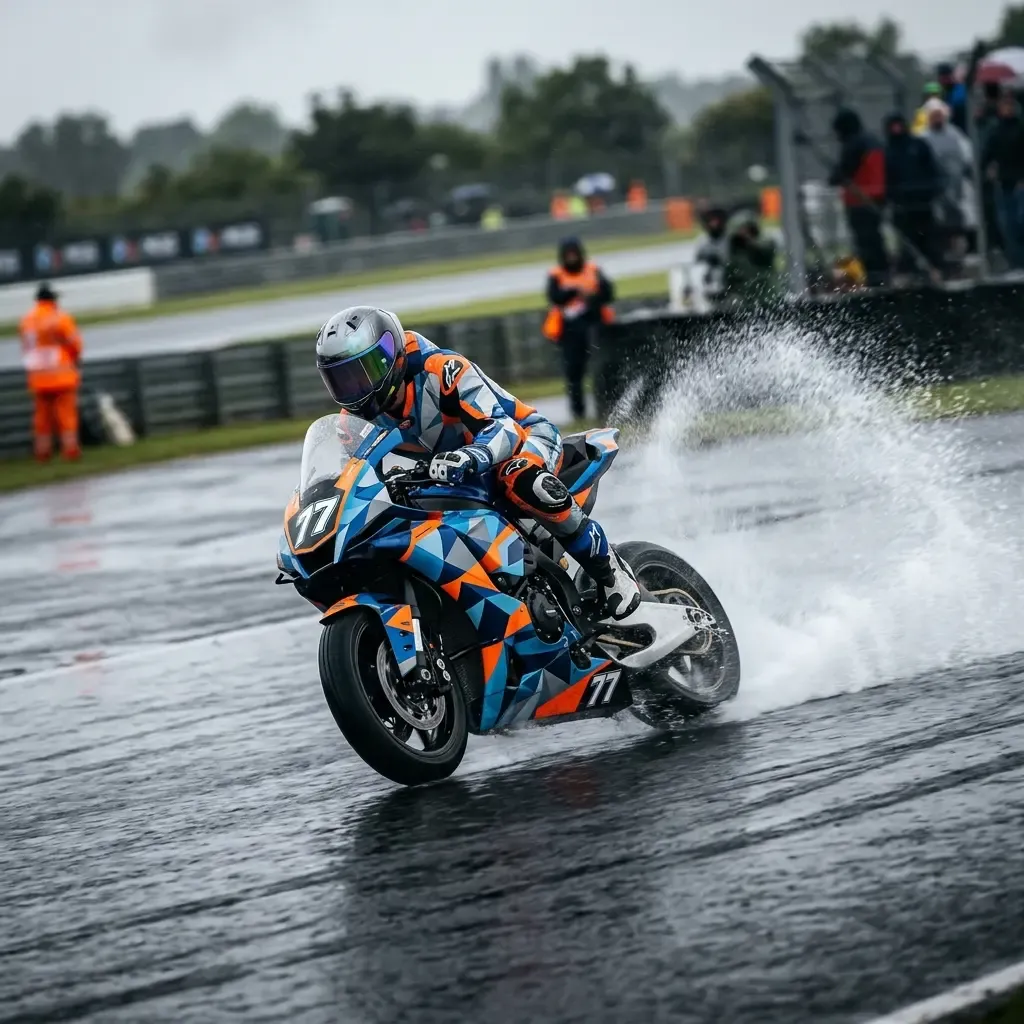
This is almost always used when rain starts to fall during a dry race. The bikes the riders started on will have ‘slick’ tyres — completely smooth rubber designed for maximum grip on a dry surface. Riding these in the wet is like trying to run on ice in leather-soled shoes; it’s incredibly dangerous. The white flag opens the door for them to switch to a bike fitted with ‘wet’ tyres, which have deep grooves to clear water away.
Welcome to the ‘Flag-to-Flag’ Race
When you hear the white flag has been shown, you’ll often hear commentators say the race is now ‘Flag-to-flagA race where the weather changes and riders pit to switch bikes without the race stopping.Read the full guide →’. This is just the official term for a race where riders are allowed to pit and swap bikes. The race continues uninterrupted from the starting flag to the chequered flag, but the mid-race bike swap is now allowed.
This rule exists for two main reasons: safety and entertainment. It prevents riders from having to risk riding on the wrong tyres for the conditions. It also avoids having to stop the race with a Red flagA flag that stops the session immediately, usually for a crash or weather.Read the full guide →, wait for the weather to pass, and organise a full restart, which can be a long and disruptive process.
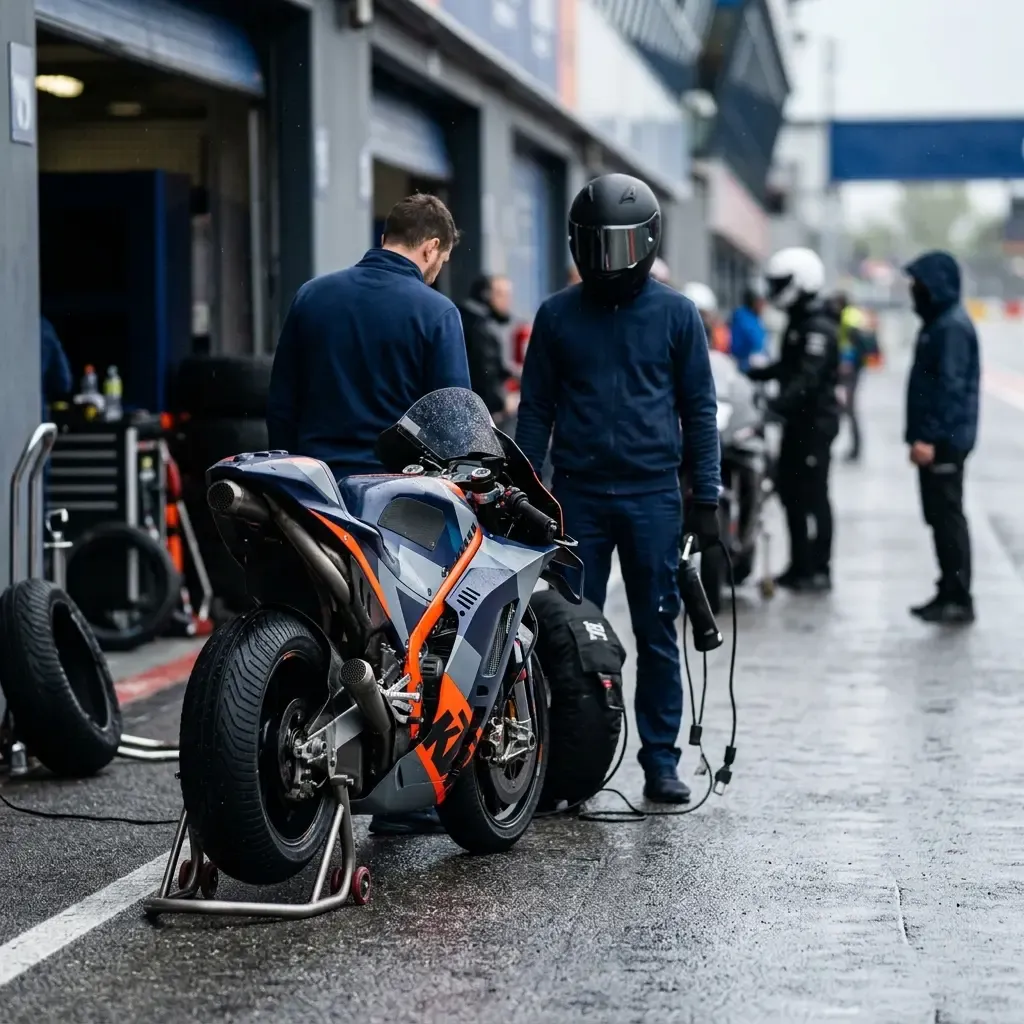
The Ultimate Strategic Gamble
The white flag is where team strategy becomes just as important as rider skill. The decision of *when* to pit is crucial and can win or lose a race. It’s a high-stakes gamble.
If a rider Pit laneThe slow lane beside the track where teams work on the bikes and riders enter and exit.Read the full guide → too early, when the track is still mostly dry, their new Wet tyresGrooved tyres that channel water away so the bike can grip a wet track.Read the full guide → will overheat and wear out very quickly, losing them huge amounts of time. But if they wait too long and get caught out by a sudden downpour, they risk crashing on their Slick tyresCompletely smooth dry-weather tyres — no tread, so the maximum amount of rubber touches the track for grip.Read the full guide →. The team on the pit wall is constantly analysing weather radars and signalling to their rider on the Pit boardA hand-held board teams hang out at the track wall to signal gaps and messages to their rider.Read the full guide →, trying to make the perfect call.
In the pit lane itself, the swap is a moment of organised chaos. The rider speeds in, leaps from their first bike onto the waiting second bike, and is sent back out into the race, all in a matter of seconds. A smooth, fast swap by the mechanics is absolutely vital.
What the White Flag is NOT
For absolute beginners, it’s easy to get confused by the different flags. So, let’s be clear:
- It is NOT a surrender flag. The race continues at full speed.
- It is NOT a red flag. The race is not being stopped or suspended.
- It is NOT a Yellow flagA warning of danger ahead — slow down and do not overtake in that zone.Read the full guide →. It doesn’t signal a specific hazard in one part of the track; it’s a change in rules for the entire circuit.
The white flag is a unique and exciting part of MotoGP. It turns a predictable race into a thrilling game of chess, where a sudden change in weather can throw everything up in the air and give an underdog a chance to snatch victory.
Quick Takeaways
- The white flag in MotoGP means the pit lane is open, and riders are now allowed to swap to their spare bike.
- It is used when weather conditions change mid-race, usually when a dry race becomes wet.
- This triggers a ‘flag-to-flag’ race, which continues without being stopped.
- The decision of when to pit is a huge strategic gamble for riders and teams, making it one of the most exciting moments in a race.