Jargon Buster
What is the Pit Lane in MotoGP?
Ever wondered about that busy road next to the main straight in MotoGP? Discover what the pit lane is, why it has a speed limit, and how it can change a race.
Independent fan site — not affiliated with MotoGP or MotoGP Sports Entertainment Group (formerly Dorna).
The Busiest Backstage in Sports
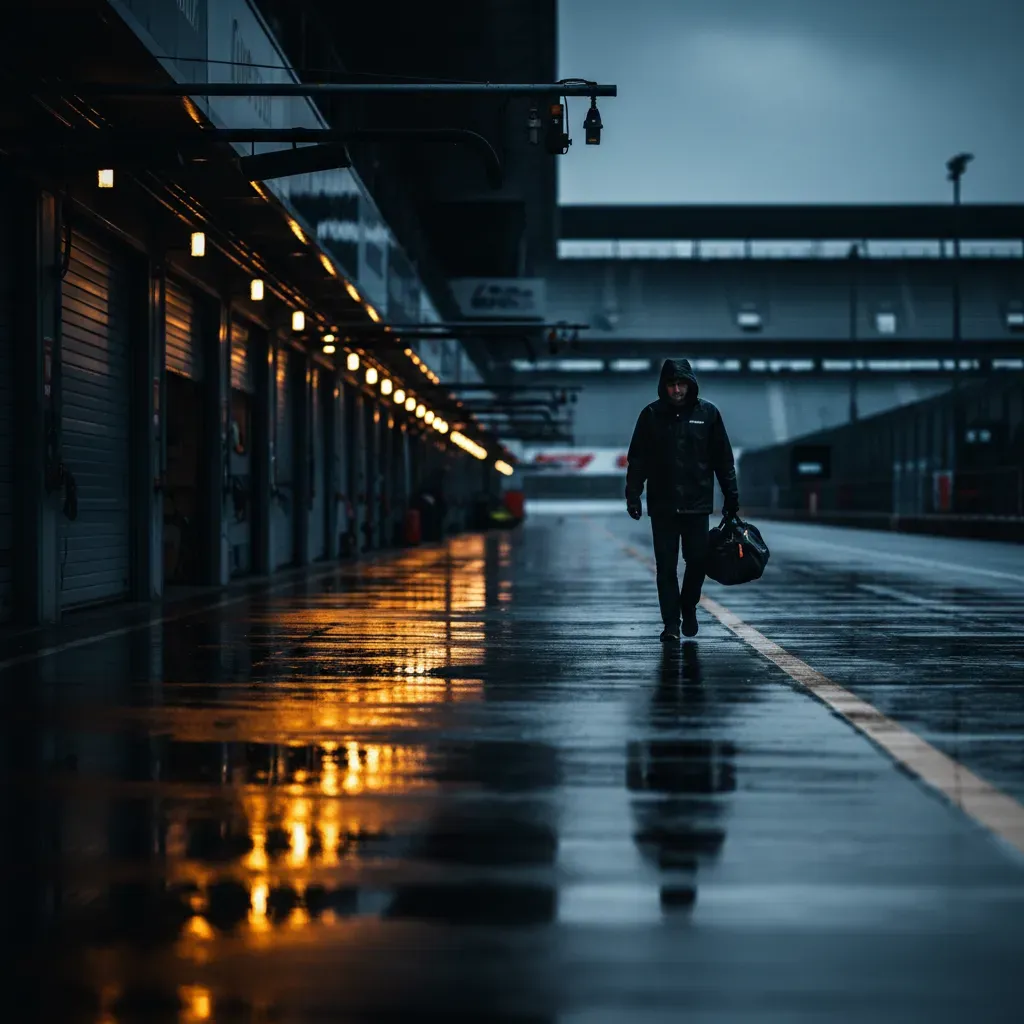
Imagine the main straight of a MotoGP circuit. Now, picture a smaller road running right alongside it, separated by a wall. That road is the pit lane. Think of it as the nerve centre of the entire race weekend, a bustling backstage area where all the preparation, strategy, and drama happens away from the main track.
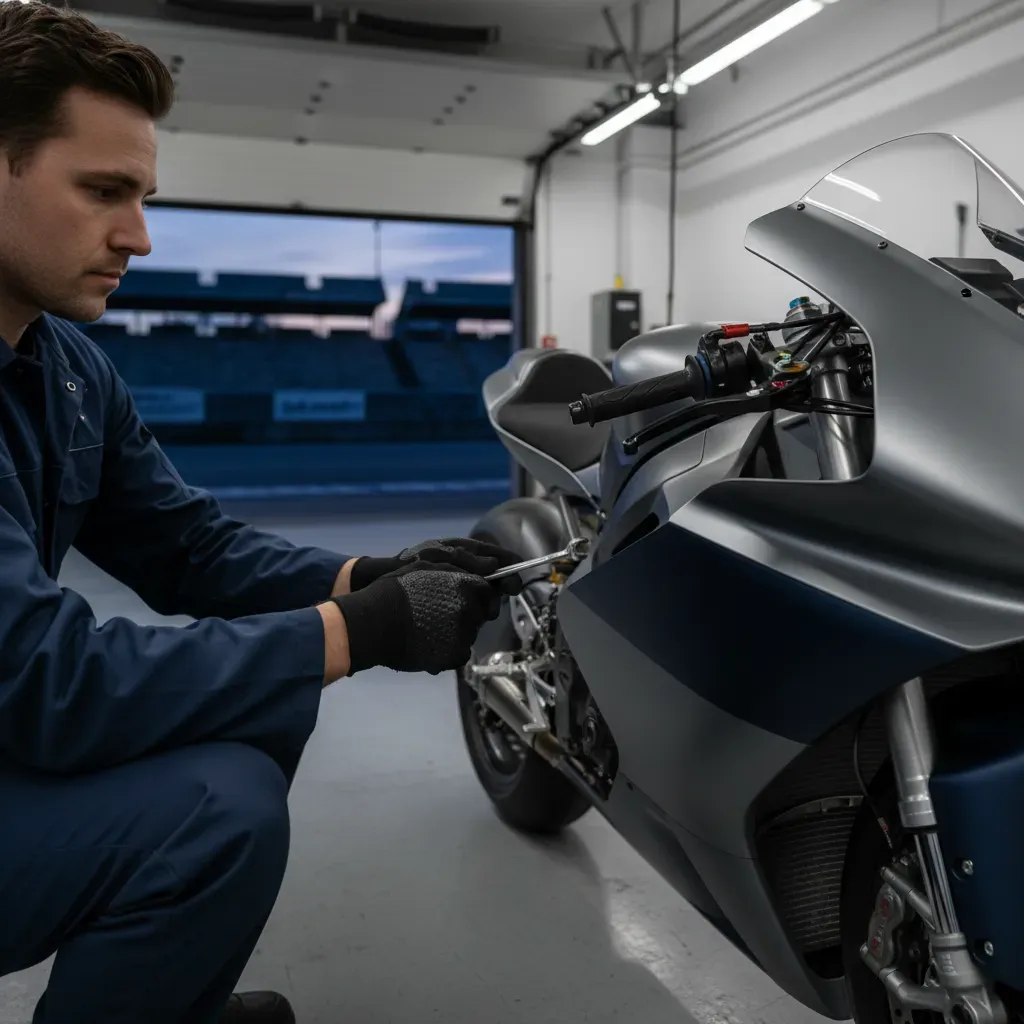
The pit lane is lined with garages, one for each team. These garages, often called the ‘pits’, are the team’s home base at the track. This is where the bikes are built, fine-tuned, and repaired by a small army of mechanics and engineers. It’s also where riders get on their bikes to start a PracticeSessions before qualifying where riders set up the bike; the top ten in Friday afternoon's Practice go straight to Q2.Read the full guide → session or the race itself.
Not Your Average Road
While bikes hit over 220 mph (350 km/h) on the main straight just metres away, the pit lane has a very strict speed limit, usually 60 km/h (about 37 mph). This might seem slow, but it’s absolutely essential for safety. The lane is crowded with mechanics, team staff, media, and officials, all working in a high-pressure environment.
Riders must stick to this limit precisely. Special sensors track their speed, and breaking the limit, even by a little, results in a penalty. Safety here is the number one priority, protecting everyone working in this tight, confined space.
Where Races Are Won and Lost
The pit lane isn’t just for starting and stopping. It can be the site of game-changing strategic moves, especially during a race with unpredictable weather. This is where you’ll hear the commentators get excited about something called a ‘Flag-to-flagA race where the weather changes and riders pit to switch bikes without the race stopping.Read the full guide →’ race.
Flag-to-Flag Race: A race that starts in one weather condition (like dry) but changes to another (like rain), allowing riders to enter the pit lane to swap to a second bike set up with different tyres.
In this scenario, a rider will speed into the pit lane, leap off their bike, and jump onto a waiting spare bike already fitted with wet-weather tyres. A smooth, fast changeover can gain a rider several seconds, while a clumsy one can cost them a shot at the podium. It’s a moment of organised chaos that tests the entire team.
Serving Your Time
The pit lane is also where riders serve certain penalties. If a rider is judged to have broken a rule, for example by failing to serve a double Long lap penaltyA penalty that sends a rider through a longer detour off the racing line, typically costing two to four seconds.Read the full guide → in time, they might be handed a ‘ride-through penalty’.
Ride-Through Penalty: A punishment where a rider must enter the pit lane, travel its full length at the speed limit, and then rejoin the race without stopping.
This costs a huge amount of time, often over 20 seconds, and can completely ruin a rider’s race. It’s a lonely journey that forces them to watch their rivals fly past on the main straight while they crawl along at 60 km/h.
The Pit Wall: The Brains of the Operation
Separating the pit lane from the racetrack is a concrete barrier known as the pit wall. This is where the team managers and chief engineers stand during the race, watching the action unfold on TV monitors that show timing data, camera feeds, and vital information.
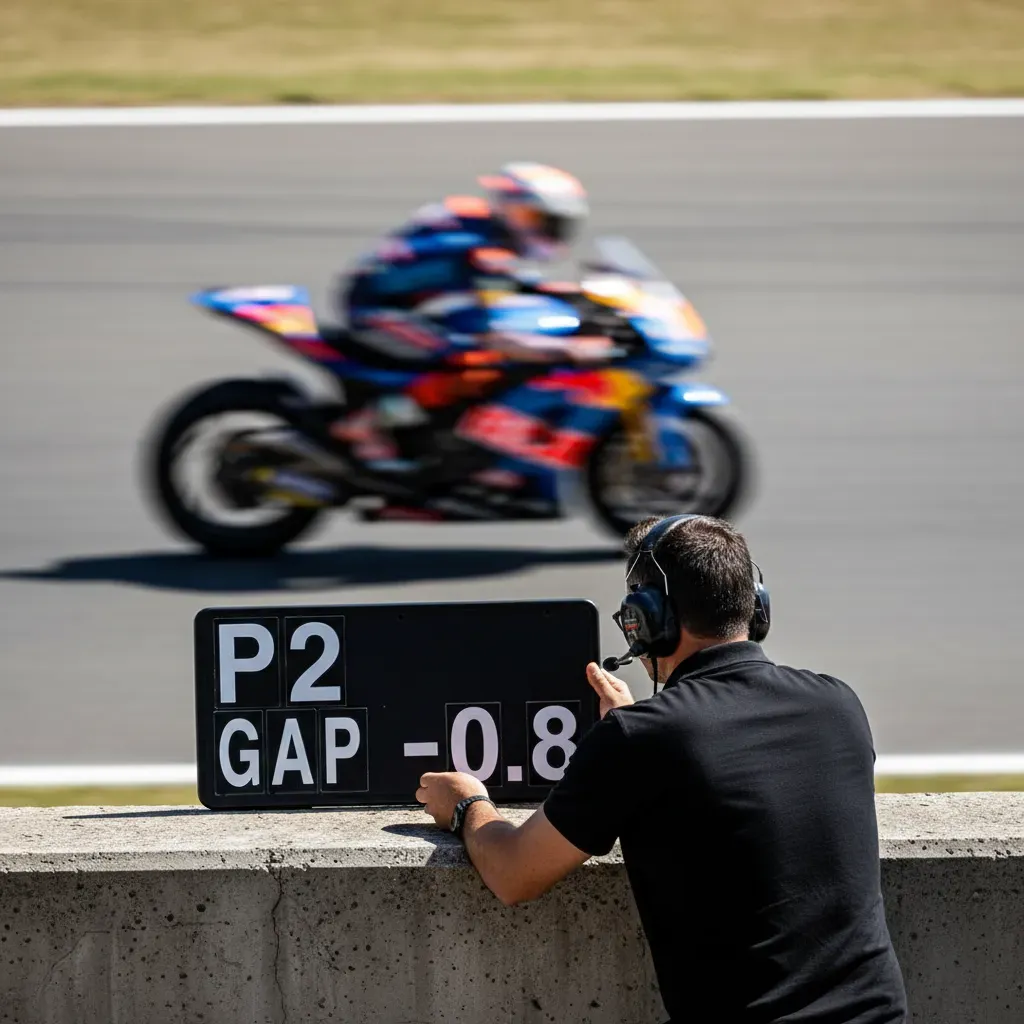
From here, they communicate with their rider using a tool that’s both simple and iconic: the Pit boardA hand-held board teams hang out at the track wall to signal gaps and messages to their rider.Read the full guide →.
Pit Board: A large board on a long Pole positionFirst place on the starting grid, earned by the fastest qualifying lap.Read the full guide →, held out over the pit wall by a mechanic, displaying basic information to the rider as they speed past.
Dashboard messages come only from Race Direction, so the pit board is still the team’s only way to talk to its rider. It gives the rider simple, clear information at a glance – their race position, the gap in seconds to the rider in front or behind, or a simple instruction like ‘PIT’. It’s a vital link between the brains on the pit wall and the rider on the bike.
More Than Just Tarmac
So, the pit lane is far more than just an access road. It’s the team’s office, workshop, and strategic command centre all rolled into one. It’s a place of intense pressure, split-second decisions, and race-defining moments that are just as thrilling as the action on the track itself.
Quick Takeaways
- The pit lane is a road parallel to the main straight where team garages are located. It’s the hub for all bike work and race strategy.
- For safety, the pit lane has a strict speed limit (usually 60 km/h) that riders must obey or face a penalty.
- It plays a key role in ‘flag-to-flag’ races, where riders come in to swap bikes for one with different tyres suited to changing weather.
- Riders also use the pit lane to serve penalties, like a ‘ride-through’, which forces them to travel its length without stopping.
- The pit wall is where team managers watch the race and use a pit board to communicate vital information to their rider.