// Beginner Guides
Racing Lines in MotoGP: Finding the Fastest Path Around the Track
The racing line is the fastest, not shortest, path around a track. Riders use an 'out-in-out' approach to corners to carry maximum speed and minimise lap times.
Independent fan site — not affiliated with MotoGP or MotoGP Sports Entertainment Group (formerly Dorna). Written by AI from official data and fact-checked: how this article was made.
On this page · 7 sections
When you watch a MotoGP race, it’s easy to be mesmerised by the sheer speed of the bikes on the straights. But races are almost always won and lost in the corners. The secret to navigating these corners at incredible speed lies in understanding a fundamental concept: the racing line.
Simply put, the racing line is the optimal path a rider takes through a corner to achieve the fastest possible lap time. It’s rarely the shortest route, but it is always the quickest.
What is a racing line?
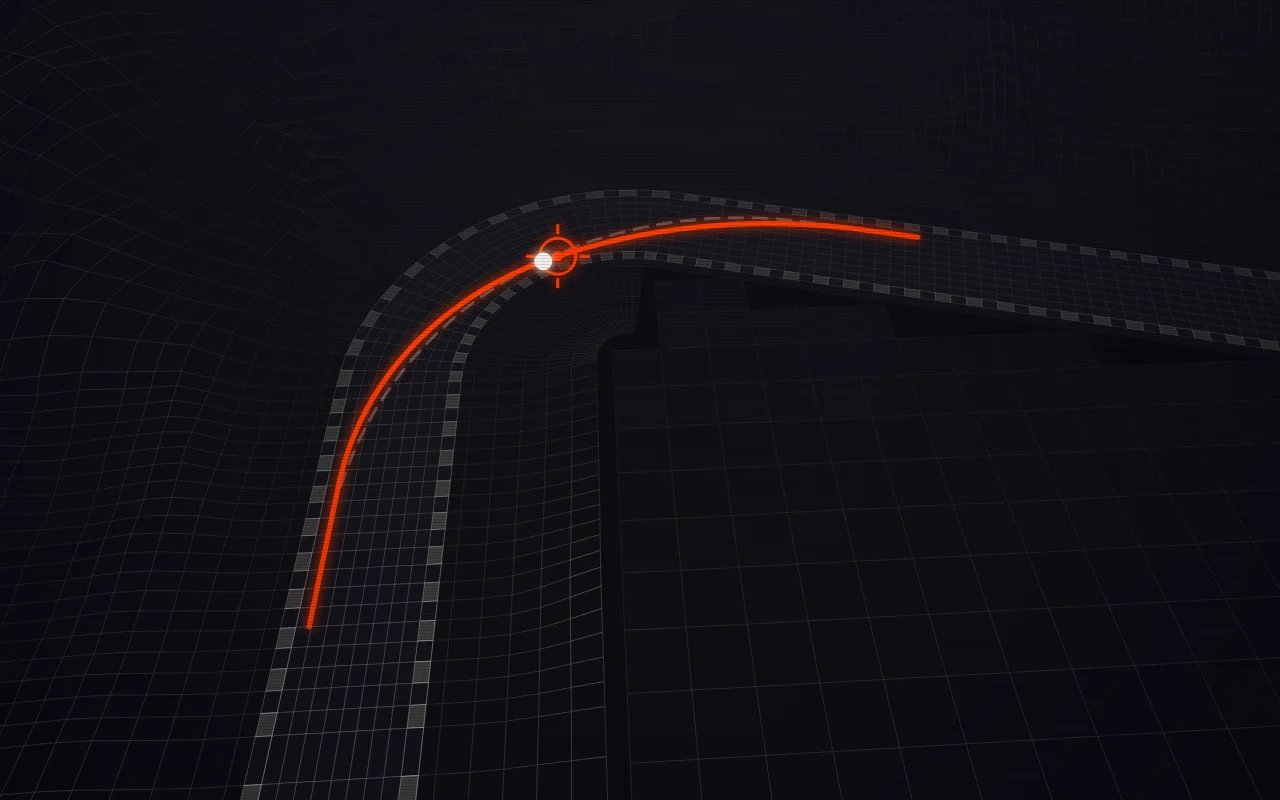
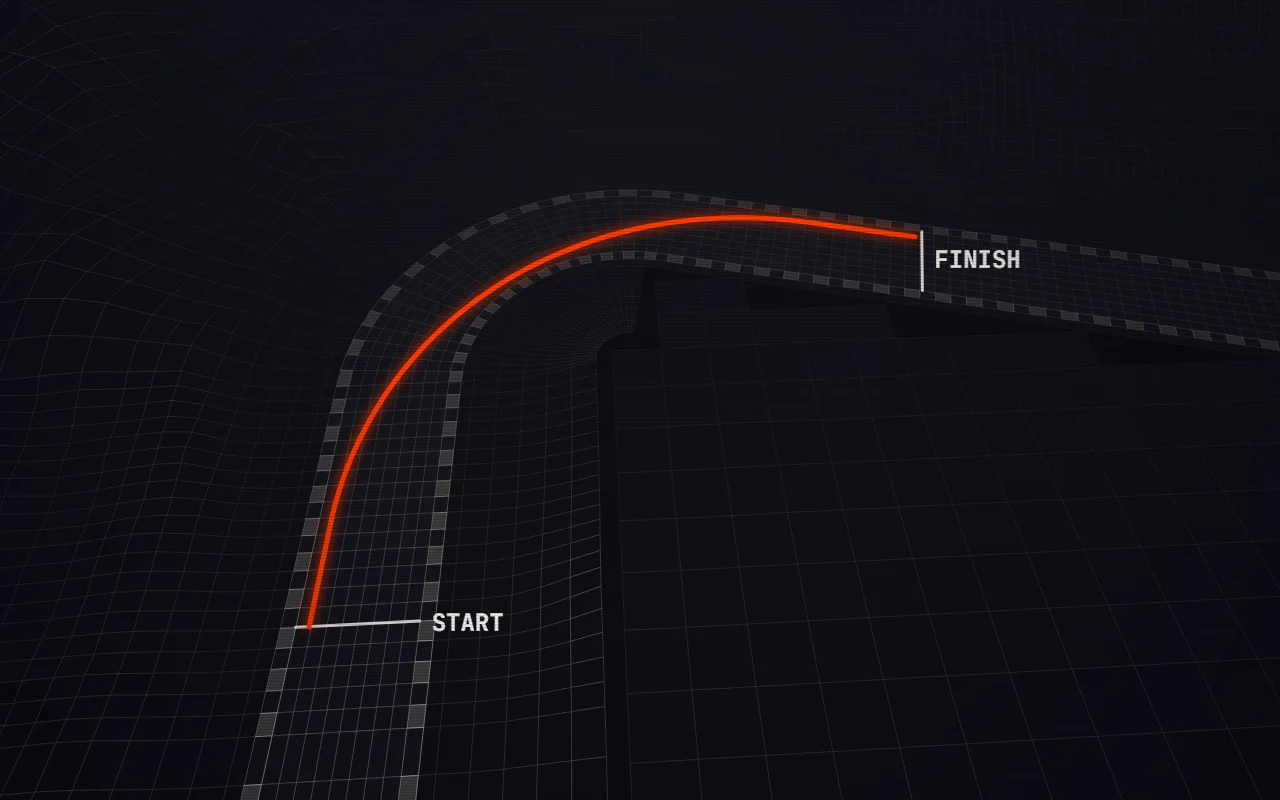
The classic racing line follows a simple principle: “out-in-out”. Imagine a rider approaching a right-hand corner. Instead of staying on the right side of the track, they will position their bike on the far left edge as they approach. This is the “out” phase.
As they begin to turn, they guide the bike towards the innermost point of the corner, which is called the apex. This is the “in” phase. Hitting this apex perfectly is the most critical part of the corner. After passing the apex, the rider can begin to straighten the bike and accelerate, allowing the machine to drift back towards the outside edge of the track on the exit. This is the final “out”.
By using the full width of the track, this “out-in-out” method effectively makes the corner as wide and straight as possible. A wider arc means the rider doesn’t have to slow down as much, allowing them to carry more speed throughout the entire turn.

Read the narration
- Why don't MotoGP riders take the shortest way round a corner?
- Hug the inside, and the turn gets tight, so the bike has to slow right down.
- Instead, they go out, in, out, using the whole track to make the turn wider and faster.
- The key point is the apex: the innermost point of the corner.
- Hit it right, and the bike stands up sooner, so the rider gets on the power earlier.
- Pass on the inside, and your line gets tight. A rival can cut back with a better exit.
- The racing line is not the shortest way round. It is the fastest.
Why isn’t the shortest line the fastest?
It might seem logical that covering less distance would be faster, but this ignores the limits of the bike and its tyres. If a rider tried to take the shortest path by hugging the inside of a corner all the way around, they would have to create a very tight turning circle.
This tight turn would require them to brake extremely hard on entry and keep their speed very low through the middle of the corner. More importantly, they wouldn’t be able to apply the throttle properly until the bike was almost completely straight again, long after exiting the turn. The time lost from being so slow mid-corner and so late on the power would far outweigh the tiny amount of distance saved.
The racing line is all about maximising exit speed. By taking a wider entry to hit that perfect apex, a rider can get the bike turned earlier and begin accelerating sooner. That higher speed then carries all the way down the following straight, saving huge chunks of time on the stopwatch.
How do riders find the perfect line?
While the “out-in-out” theory is a great starting point, the perfect line isn’t a fixed route painted on the track. It’s a dynamic thing that changes based on numerous factors. Riders spend PracticeSessions before qualifying where riders set up the bike; the top ten in Friday afternoon's Practice go straight to Q2.Read the full guide → sessions experimenting to find the ideal path for their specific bike and style.
Factors like bike setup play a huge role. A bike that is agile and turns quickly might be able to use a slightly tighter line. As the race progresses, tyre wear becomes critical. A rider might have to adjust their line mid-race to find parts of the track with more grip as their tyres lose performance.
Track conditions are perhaps the biggest variable. A wet track completely changes the game. The normal, Dry lineThe strip of a wet track that dries first, because every bike runs over it, giving the most grip.Read the full guide → is often covered in a thin layer of rubber, which becomes incredibly slippery when wet. In the rain, riders will actively search for a different “wet line”, often on the very edges of the track, where the rougher tarmac offers more grip.
What about overtaking?
This is where racing strategy comes alive. Since there is generally only one fastest line through a corner, a rider has to move off it to make a pass. This creates a fascinating cat-and-mouse game.
A common overtaking technique is to “out-brake” an opponent. This involves braking later and harder on the inside of the other rider into a corner. While this move gets you in front, it severely compromises your line, forcing you to take a tighter, slower path through the apex. This can make you vulnerable to a counter-attack on the exit.
This counter-attack is often called the “cutback”. A clever rider who has been passed on the inside can deliberately aim for a slightly later apex. This allows them to get the bike turned more effectively and achieve a much better drive onto the following straight, potentially re-passing the rider who has just gone past them.
Is there only one racing line?
Not at all. While the general principle is the same for everyone, different bikes and rider styles can lead to slightly different optimal lines. For example, bikes with powerful V4 engines are known for their incredible acceleration. Their riders might favour a more aggressive, “stop-and-go” line: brake hard in a straight line, turn the bike very sharply, and use the engine’s power to rocket out of the corner.
In contrast, bikes with smoother inline-four engines have traditionally excelled at maintaining high speeds through the middle of a corner. (Yamaha was the last manufacturer to race an inline-four, before switching to a V4 for 2026.) Their riders might prefer a more flowing, sweeping line that relies on carrying momentum rather than raw acceleration. These subtle differences are why you often see riders making up time on their rivals in different corners around the same lap.
Quick Takeaways
- The racing line is the fastest, not shortest, path around a corner.
- It generally follows an “out-in-out” pattern, using the full width of the track to make the corner as wide as possible.
- The primary goal of the racing line is to maximise speed on the exit of the corner and onto the following straight.
- Riders must deliberately move off the ideal racing line to overtake, which creates strategic battles.
- The perfect line is not fixed; it changes with the bike, tyre wear, weather conditions, and a rider’s personal style.
Quick questions
- Q.What is the apex of a corner?
- The apex is the innermost point of a corner that a rider aims for. Hitting the correct apex is crucial for setting up a fast exit onto the next straight.
- Q.Why do riders take a different line in the rain?
- In the rain, the normal racing line can be very slippery due to rubber build-up and oil. Riders search for a 'wet line' on different parts of the tarmac to find better grip.
- Q.Is the racing line the same for a car and a motorbike?
- The general principle of 'out-in-out' is similar, but the specifics are very different. A motorbike has to lean significantly, which changes the geometry and the optimal path compared to a four-wheeled car.
- Q.What does 'defending the line' mean?
- This is when a rider deliberately positions their bike on the inside of a corner approach to block an opponent from overtaking. It forces the attacker to take a longer, slower path around the outside.