// Jargon Buster
MotoGP Top Speed Explained: How Fast Do These Bikes Go?
MotoGP bikes reach astonishing speeds of over 360 km/h (225 mph), thanks to a combination of powerful engines, advanced aerodynamics, and rider skill.
Independent fan site — not affiliated with MotoGP or MotoGP Sports Entertainment Group (formerly Dorna). Written by AI from official data and fact-checked: how this article was made.
On this page · 8 sections
What is ‘Top Speed’?
Top Speed: The absolute maximum velocity a motorcycle reaches on the circuit, almost always on the longest straight.
When you hear commentators get excited about a new record, they are talking about the highest speed recorded by a bike during any session of a race weekend. It’s a headline-grabbing number that showcases the incredible engineering and bravery involved in MotoGP.
This speed is measured at a specific point on the track called a ‘speed trap’, which uses sensors to calculate how fast the bike is travelling as it passes. It’s a pure measure of straight-line performance.
Just how fast are we talking?
The numbers are genuinely mind-boggling. Modern MotoGP bikes consistently break the 360 kilometres per hour (km/h) barrier, which is over 223 miles per hour (mph). The official record kept being pushed higher, and in 2026 it reached 368.6 km/h (about 229 mph) at Mugello. From 2027, smaller 850cc engines and less aerodynamic help are designed to bring top speeds down.
To put that into perspective, that’s faster than the take-off speed of a jumbo jet. It’s a velocity where the scenery becomes a blur and the slightest mistake has huge consequences. While it’s a key performance indicator, it’s only one piece of the puzzle that makes a competitive racing motorcycle.
What makes a MotoGP bike so fast?
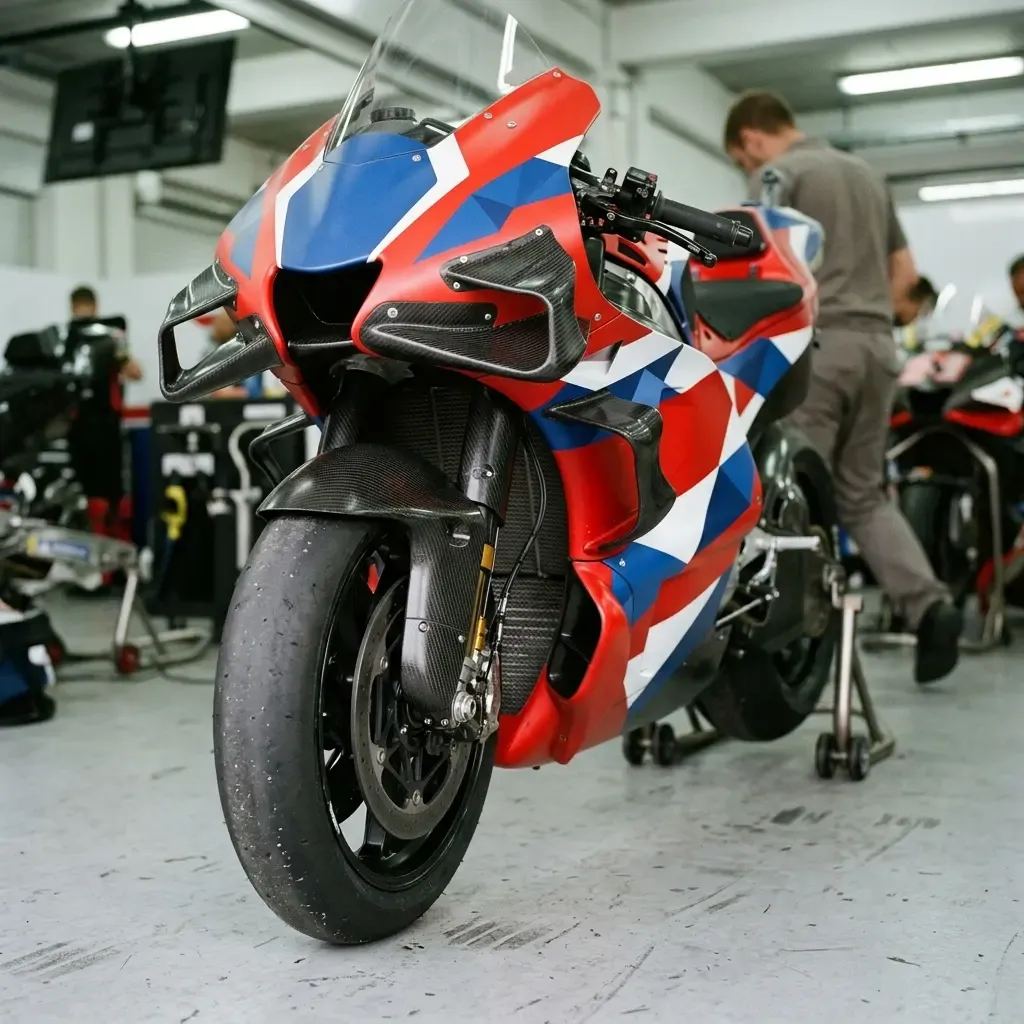
Achieving these speeds isn’t down to one single thing, but a combination of incredible technologies working together. The first is raw power. MotoGP engines produce well over 250 horsepower. This is an immense amount of power for a machine that weighs less than 160 kilograms.
Next is WingletsSmall wings on the bodywork that create downforce to keep the front wheel down and improve stability.Read the full guide →. You will have noticed the wings and fins on the front and rear of the bikes. This bodywork, known as the ‘fairing’, is designed to slice through the air with minimal resistance. The wings also create downforce, pushing the bike onto the track to prevent the front wheel from lifting under fierce acceleration—a behaviour known as a ‘wheelie’.
Finally, sophisticated electronics play a vital role. Systems like traction control and anti-wheelie control are complex computer programs that help the rider apply the engine’s power to the tarmac as effectively as possible without the bike becoming unstable.
Is top speed the most important thing?
In a word, no. While it’s a spectacular feat, races are almost always won and lost in the corners. A bike that is 5 km/h faster on the straight might be fantastic for overtaking, but it’s useless if it can’t slow down, turn, and accelerate out of the next corner efficiently.
Think of it this way: a bike spends far more of its lap time braking, turning, and accelerating than it does at its absolute maximum speed. A motorcycle with brilliant braking stability and high cornering speed will often produce a faster lap time than a bike built purely for straight-line performance.
A successful MotoGP machine is a complete package. It needs to be a rocket on the straights, but also nimble and stable through the turns. Finding that perfect balance is the ultimate challenge for the engineers.
Where are the highest speeds recorded?
Not all circuits are created equal. To reach these incredible speeds, a bike needs a very, very long straight. This gives the rider enough time to get through all six gears and keep the throttle wide open.
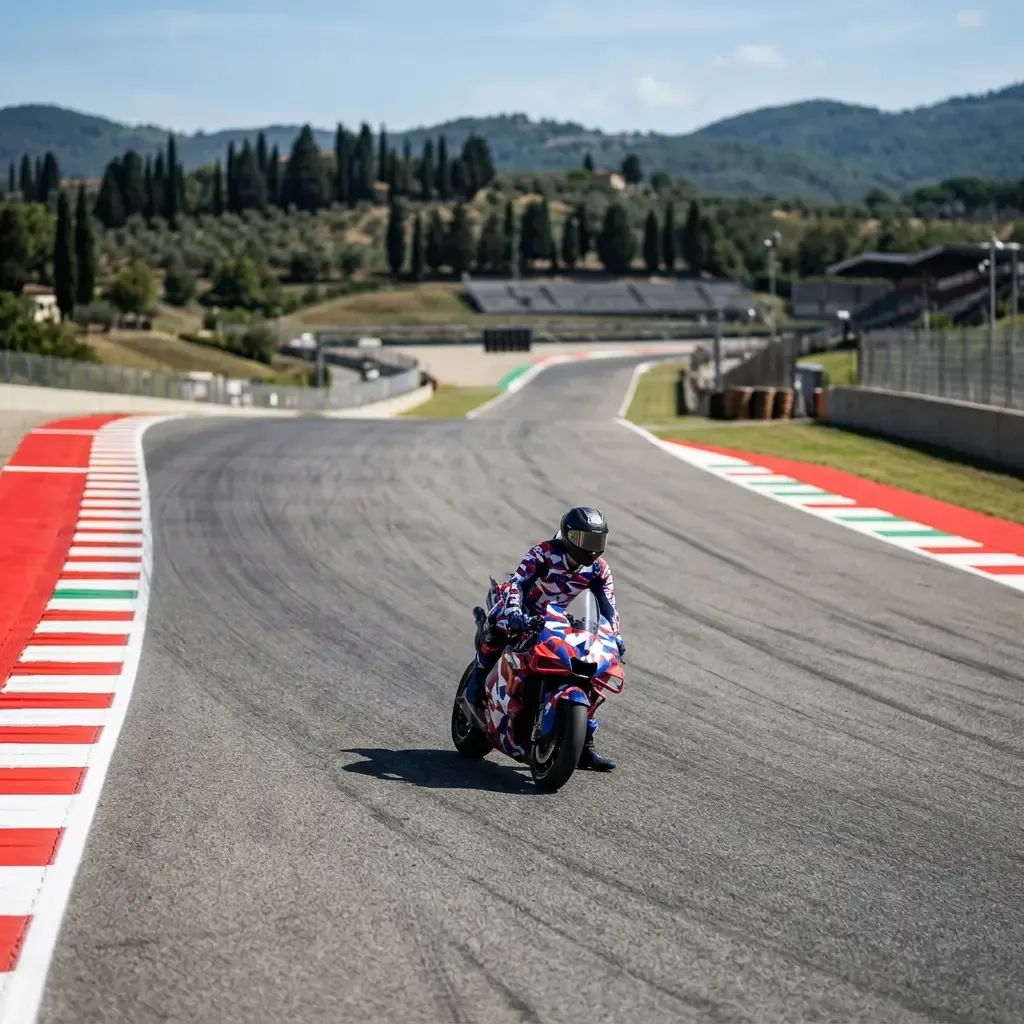
Tracks famous for their long straights, and therefore their high top speeds, include the Mugello Circuit in Italy and the Lusail International Circuit in Qatar. The main straight at Mugello is over 1.1 kilometres (0.7 miles) long, providing the perfect stage for setting new speed records.
Conversely, on tighter, twistier tracks with shorter straights, the bikes will never get close to their potential maximum speed. The layout of the circuit is the single biggest factor in what top speed is achievable on any given weekend.
How much does the rider influence top speed?
The rider’s role is absolutely crucial. To minimise air resistance (or ‘drag’), the rider has to get into a ‘full tuck’ position. This involves tucking their arms and legs in as tightly as possible and getting their helmet down behind the bike’s small windscreen.
By making themselves as small and streamlined as possible, they become part of the bike’s aerodynamic package. A rider who is slightly out of position can create enough extra drag to scrub off several kilometres per hour, which can be the difference between a successful overtake and a failed one.
Quick Takeaways
- Top speed is the maximum velocity a bike hits on a track’s longest straight. The record reached 368.6 km/h (229 mph) at Mugello in 2026.
- It’s a result of immense engine power (over 250hp), advanced aerodynamics (wings and fairings), and sophisticated electronics.
- While impressive, top speed is not the most critical factor; braking, cornering, and acceleration are more important for a fast lap time.
- The rider’s ability to get into a tight ‘tuck’ position is essential for reducing air resistance and achieving the highest possible speed.
Quick questions
- Q.Is a MotoGP bike faster than a Formula 1 car?
- Their top speeds are in a similar range, and both can pass 350 km/h on the longest straights. But F1 cars are far faster through corners thanks to their huge aerodynamic downforce, which makes their lap times much quicker.
- Q.What is the official MotoGP top speed record?
- Jorge Martin set the official record of 368.6 km/h (about 229 mph) on an Aprilia at Mugello in 2026. It beat the previous record of 366.1 km/h, also set at Mugello, whose long main straight is where records tend to fall.
- Q.Do all bikes on the grid have the same top speed?
- No. Different manufacturers have different strengths. Some bikes, like the Ducati, are historically known for their powerful engines and exceptional straight-line speed, while others may have an advantage in cornering agility.
- Q.How does a rider's weight affect top speed?
- A lighter rider generally has a small advantage in both acceleration and top speed because the engine has less mass to propel. This is one reason why MotoGP riders are elite athletes with very low body fat.