Beginner Guides
The Ultimate MotoGP Glossary: A-Z of Key Terms
Your ultimate A-Z MotoGP glossary! Understand terms like Apex, Highside, and Parc Fermé with our simple, jargon-free guide for new fans.
Welcome to Your MotoGP Cheat Sheet!
So, you’re new to the incredible world of MotoGP? Welcome! It’s the fastest, most exciting show on two wheels, but listening to the commentary can sometimes feel like learning a new language. What’s an ApexThe innermost point of a corner — the tightest part of the turn that a rider aims to clip to carry the most speed onto the next straight.Read the full guide →? Why are they talking about a HighsideA violent crash where the sliding rear tyre suddenly grips again and flicks the rider up and over the top of the bike.Read the full guide →? What on earth is a Holeshot deviceA gadget that squats the bike down at the start for a harder launch off the line, then releases.Read the full guide →?
Don’t worry, we’ve all been there. Think of this page as your friendly companion for the first few race weekends. It’s a simple, scannable list of the most common terms you’ll hear. No complicated physics, just plain English definitions to help you follow along and sound like you know your stuff.
Keep this open during the race, and you’ll be up to speed in no time!
A-Z Glossary of MotoGP Terms
Apex
The apex is simply the innermost point of a corner. Riders aim to hit this point perfectly as it allows them to carry the most speed through the corner and get the best drive onto the next straight.
Box, Box, Box
This is a radio instruction you might hear. It’s the team in the garage telling their rider to come into the Pit laneThe slow lane beside the track where teams work on the bikes and riders enter and exit.Read the full guide →, usually for a change of tyres or to switch to their spare bike if the weather changes.
Chicane
A chicane is a tight sequence of back-to-back corners, like a left-hander immediately followed by a right-hander. They are often added to long straights to slow the bikes down for safety reasons.
Dry Race
A race that has been officially declared ‘dry’ by Race Direction. This means riders must use Slick tyresCompletely smooth dry-weather tyres — no tread, so the maximum amount of rubber touches the track for grip.Read the full guide → – the ones with no tread pattern – which offer maximum grip on a dry surface.
Grid
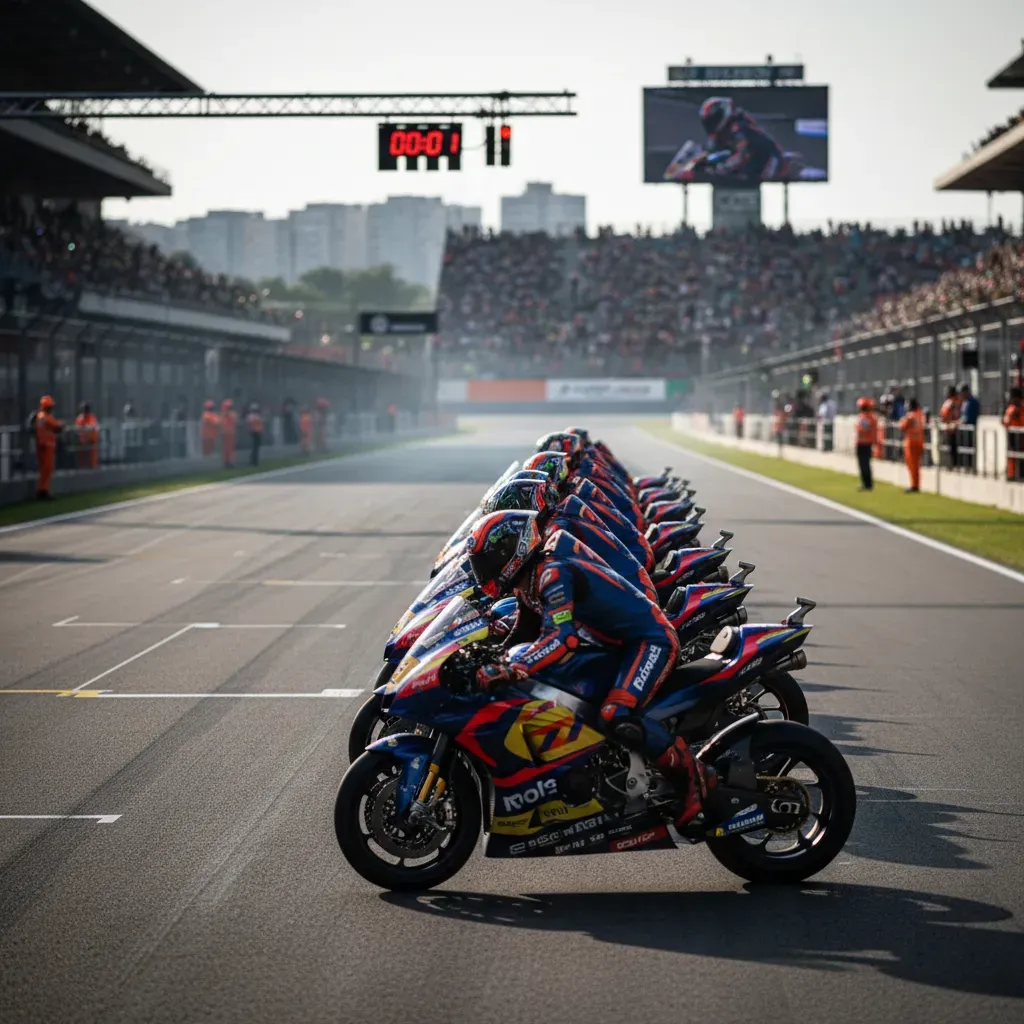
The grid is the marked-out starting area on the track where riders line up before the race begins. Their position on the grid is determined by how fast they were in the QualifyingThe timed sessions that set the starting order, split into Q1 and Q2 for the front rows.Read the full guide → session.
Gravel Trap
This is the big bed of gravel on the outside of corners. It’s a safety feature designed to slow down a rider and bike that has run off the track, helping to prevent a heavy impact with a barrier.
Highside
A particularly nasty type of crash. It happens when the rear tyre loses grip and slides, but then suddenly regains traction, violently bucking the bike and flinging the rider high into the air.
Holeshot Device / Ride-Height Device
This is a clever piece of tech that riders activate manually. It physically lowers the rear (and sometimes front) of the bike to change its centre of gravity. This helps prevent the front wheel from lifting (a wheelie) off the start line and improves acceleration out of corners.
Lean Angle
This refers to how far the rider leans the bike over into a corner. In MotoGP, this can be an astonishing 65 degrees or more, with the rider’s elbow and shoulder almost scraping the tarmac. It’s what allows them to maintain incredible speed through turns.
Lowside
A more common and generally less violent crash than a highside. A lowside occurs when either the front or rear tyre loses grip and slides away, causing the bike and rider to fall and slide along the track surface.
Paddock
The PaddockThe fenced-off working area behind the pits where teams, hospitality and motorhomes are based.Read the full guide → is the exclusive, behind-the-scenes area at the circuit. It’s where the team trucks are parked, where riders have their motorhomes, and where all the teams, media, and VIPs operate from. Think of it as the sport’s central nervous system on a race weekend.
Parc Fermé
A French term that means “closed park.” After qualifying and the race, the top bikes are immediately taken to this secure, supervised area. Officials inspect them here to make sure they comply with all the technical rules and haven’t been illegally modified.
Pole Position
The very first spot on the starting grid. This is the prime position, awarded to the rider who sets the single fastest lap time during the final qualifying session. It gives them a clear, unobstructed view into the first corner.
Qualifying
The timed session that takes place on Saturday before the race on Sunday. During qualifying, riders push to their absolute limit to set the fastest lap time they possibly can. The results of this session determine the starting order for the race.
Slicks (or Slick Tyres)
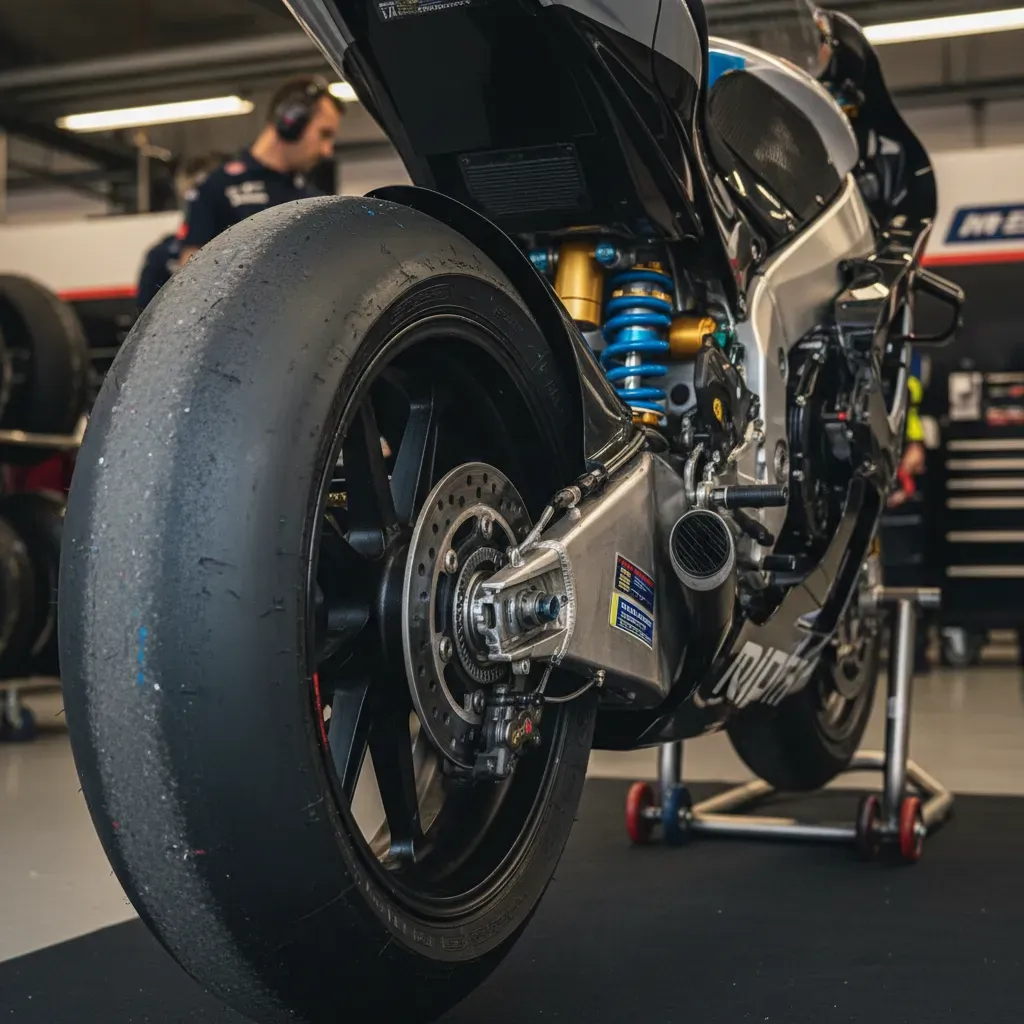
These are racing tyres with a completely smooth surface, with no grooves or tread pattern. They are made from a very soft, sticky rubber compound that provides the maximum possible grip on a dry race track.
Slipstream (or Tow)
When a rider tucks in directly behind another rider on a straight, they are in their SlipstreamThe pocket of calmer air directly behind another bike. Sitting in it means less wind resistance — so you can carry more speed for free.Read the full guide →. The rider in front punches a hole in the air, which reduces the air resistance for the rider behind, allowing them to gain speed and set up an overtake. This is also known as getting a ‘tow’.
Tifosi
The Tifosi is the name given to the incredibly passionate Italian fans. You’ll especially see and hear them at Italian races, creating a sea of red in support of Italian manufacturer Ducati and any Italian riders.
Wet Race
When it rains, Race Direction will declare a ‘wet race’. This allows riders to enter the pit lane and switch to bikes fitted with special wet-weather tyres, which have grooves to disperse water.
Wets (or Wet Tyres)
Unlike slicks, Wet tyresGrooved tyres that channel water away so the bike can grip a wet track.Read the full guide → have a deep tread pattern. These grooves are essential in the rain as they work to channel water away from the tyre’s surface, helping to prevent aquaplaning and allowing the rider to maintain grip.
Quick Takeaways
- This glossary is your key to understanding the race commentary, from track features like the Apex and Chicane to race procedures like Qualifying and Parc ferméA controlled area where the top bikes are held after the session for checks, with no team work allowed.Read the full guide →.
- Safety is paramount. Understanding the difference between a Highside and a Lowside crash helps you appreciate the risks riders take.
- Technology like the HoleshotGetting to the first corner in the lead off the start line.Read the full guide → Device and tactics like using a Slipstream are crucial for gaining an advantage on track.
- Tyres are everything! Whether it’s Slicks for a dry race or Wets for a rainy one, the right rubber is the key to victory.