Beginner Guides
MotoGP Marshals: The Unsung Heroes
Often seen in bright orange overalls, MotoGP marshals are the volunteer heroes who ensure rider safety, communicate vital information with flags, and manage any on-track incidents.
Independent fan site — not affiliated with MotoGP or MotoGP Sports Entertainment Group (formerly Dorna). Written by AI from official data and fact-checked: how this article was made.
When you watch a MotoGP race, your eyes are naturally drawn to the riders and their incredible machines. But dotted around the edge of the circuit, you’ll see figures in bright orange overalls. These are the track marshals, and without their skill, bravery, and dedication, Grand Prix motorcycle racing simply couldn’t happen.
They are the unsung heroes of every race weekend. From the first PracticeSessions before qualifying where riders set up the bike; the top ten in Friday afternoon's Practice go straight to Q2.Read the full guide → session on Friday to the final chequered flag on Sunday, marshals are the first line of defence, ensuring the event runs as smoothly and safely as possible.
What Exactly Is a Marshal?
A track marshal is an official who volunteers to help manage the safety and organisation of a race event directly at the circuit. Hundreds of them are needed for a single Grand Prix, positioned at strategic locations called ‘marshal posts’ all around the track, especially at corners where incidents are more likely.
Their primary responsibility is the safety of the riders. However, their role is incredibly varied. They act as the eyes and ears of Race Control—the central command hub that manages the entire event. They are trained first responders, firefighters, and expert communicators, all rolled into one.
What Do Marshals Do Before a Race?
The work of a marshal begins long before the bikes head out of the Pit laneThe slow lane beside the track where teams work on the bikes and riders enter and exit.Read the full guide →. They attend detailed briefings to understand the procedures for the day and any specific points of concern for that particular circuit. They walk their section of the track, checking for any potential hazards.
They also ensure all their equipment is ready. This includes communication radios, fire extinguishers, and a full set of signal flags. This preparation is vital, ensuring they are ready to react instantly to any situation that might unfold during a session.
How Do Marshals Communicate With Riders?
With bikes travelling at over 200 mph, verbal communication is impossible. Instead, marshals use a system of coloured flags to give riders crucial information instantly. This is their most visible and important job during a race.
According to MotoGP regulations, a single Yellow flagA warning of danger ahead — slow down and do not overtake in that zone.Read the full guide → warns riders of a danger alongside the track, while Double yellow flagsTwo yellow flags waved together: the hazard is partly or wholly blocking the track — slow down, no overtaking.Read the full guide → mean the track itself is blocked. In either case, riders must slow down and are forbidden from overtaking until they pass a green flag, which signals that the track ahead is clear.
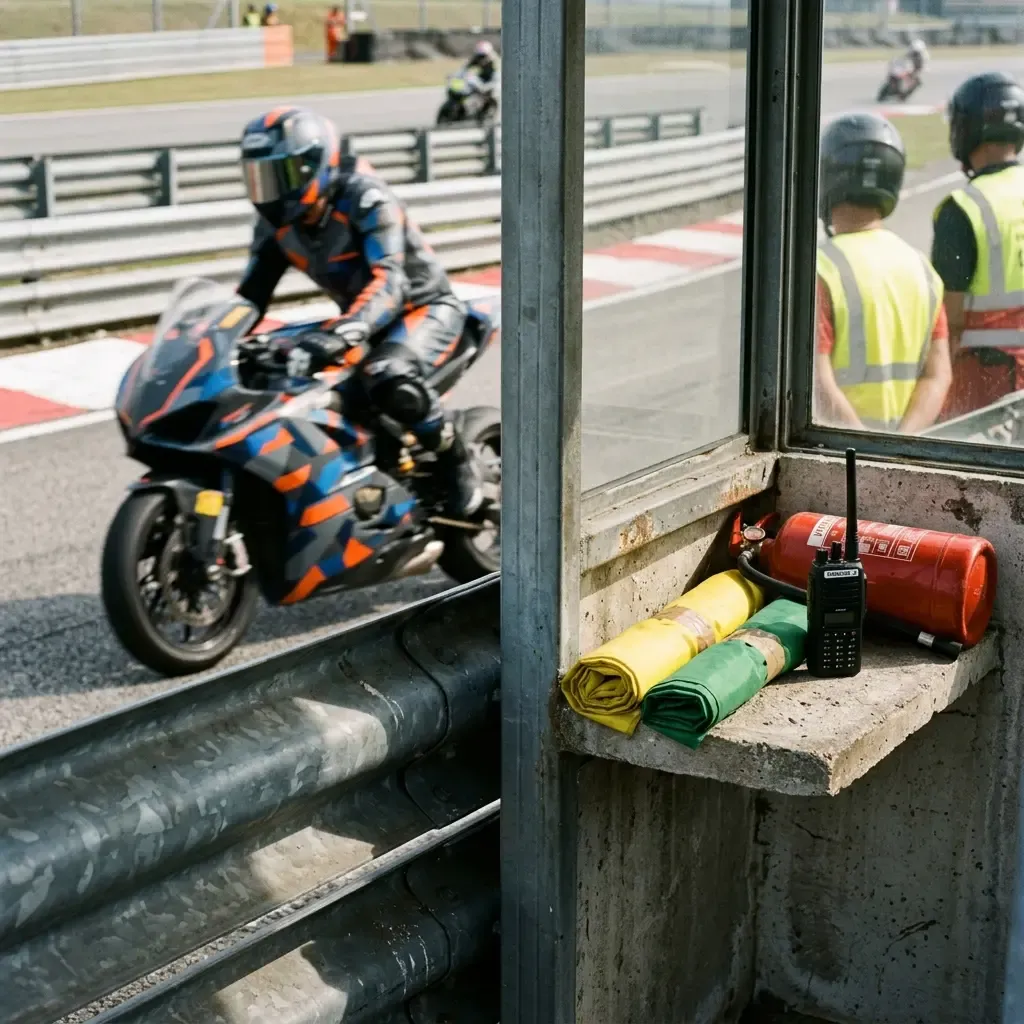
Other flags include the blue flag, shown to a slower rider to let them know a faster rider is about to lap them and they should let them pass. The most serious flag is the Red flagA flag that stops the session immediately, usually for a crash or weather.Read the full guide →, which means the session has been stopped immediately, usually due to a major incident or dangerous weather conditions.
What Happens When a Rider Crashes?
This is where marshals truly show their courage. When a rider falls, the nearest marshals spring into action. Their first priority is the rider’s well-being. They will rush to the scene, checking if the rider is injured and signalling for medical assistance if required.
Simultaneously, other marshals will be warning approaching riders of the hazard using yellow flags. Once the rider is safe, their next job is to deal with the motorcycle. This might involve putting out a fire with an extinguisher or carefully moving the bike to a safe location behind the track barriers.
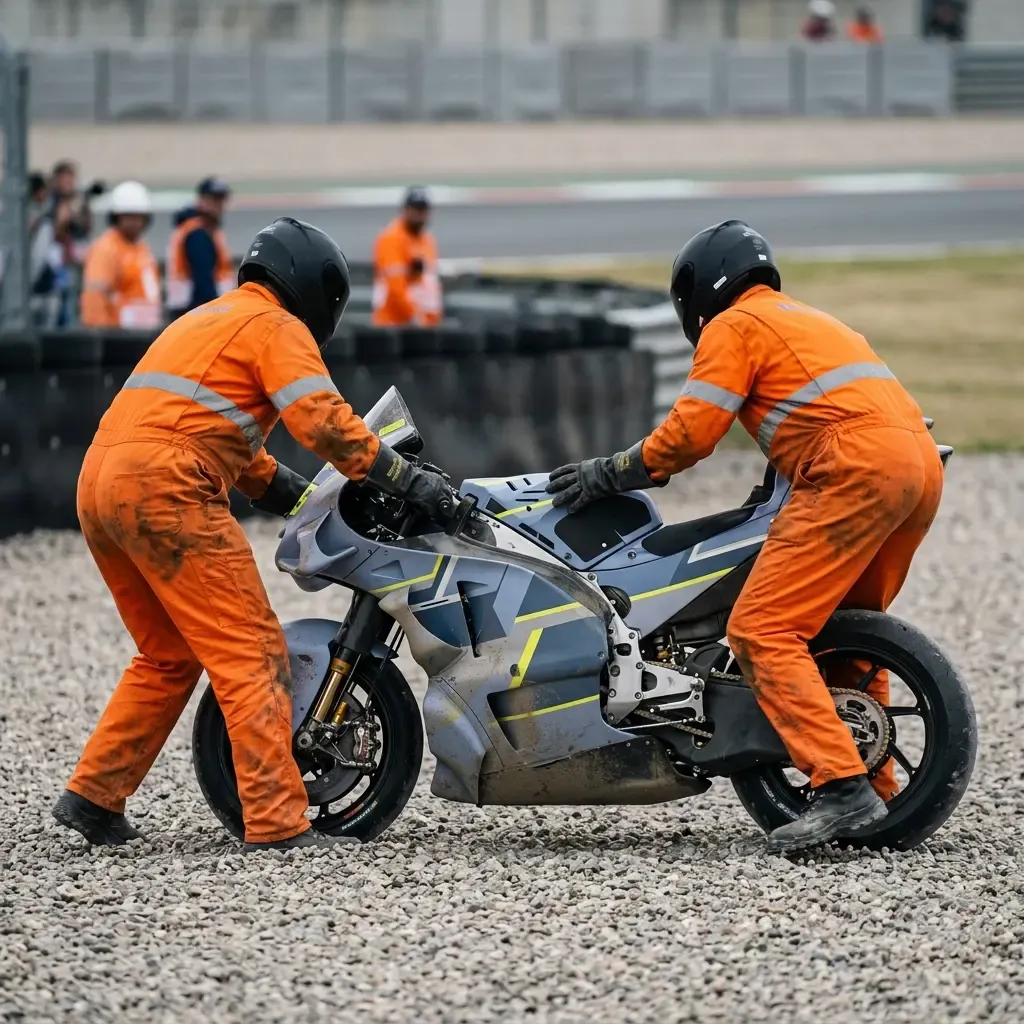
They also have to quickly clear any debris from the racing surface to prevent it from causing a problem for another rider. They perform all these tasks with incredible speed and composure, often just metres away from other bikes still racing at high speed.
Are Marshals Paid Professionals?
One of the most remarkable things about marshals is that the vast majority are volunteers. They are not paid for their work; they do it purely for the love of motorsport. They give up their weekends and often travel long distances at their own expense to be part of the action.
Despite being volunteers, they are highly trained and must undergo regular assessments to ensure their skills are up to date. Their passion and professionalism are what make them the backbone of MotoGP safety. They get the best seat in the house, but they earn it through immense responsibility and focus.
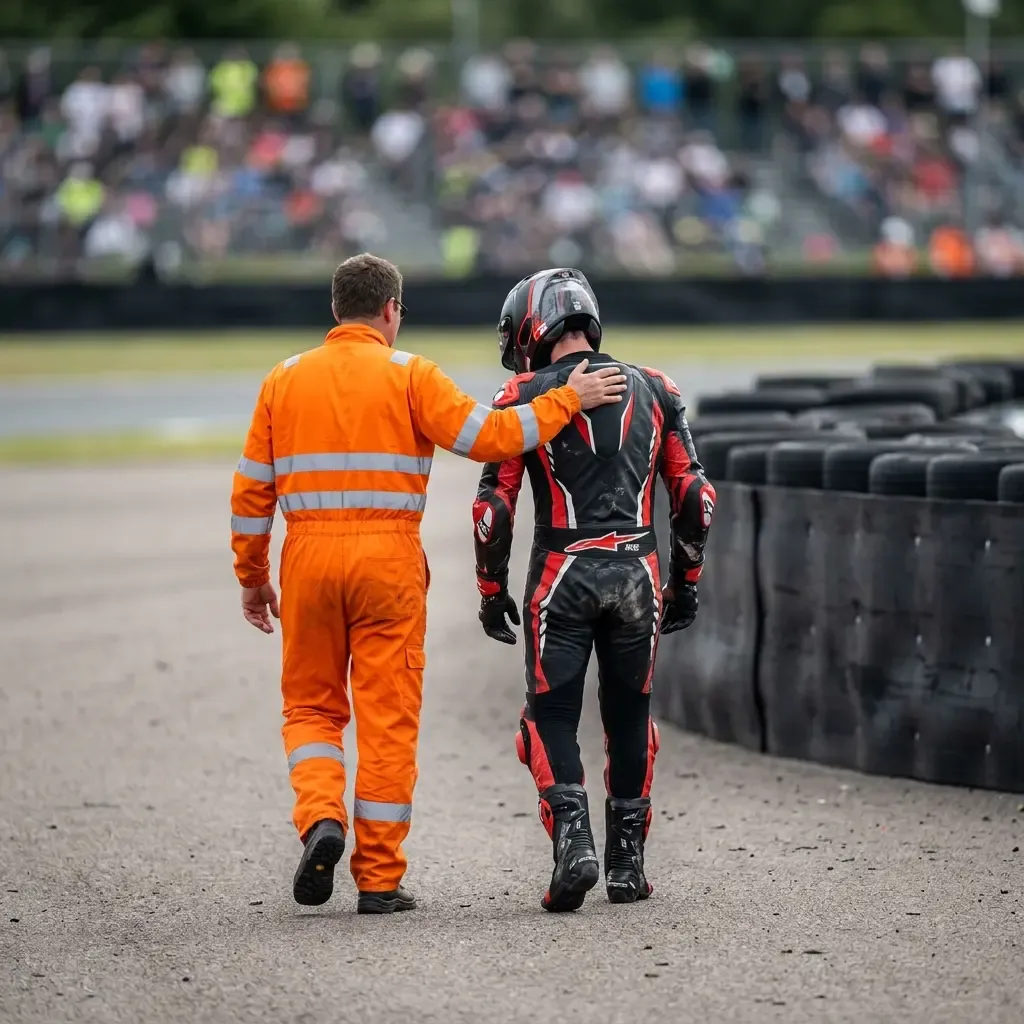
So next time you’re watching a race, take a moment to appreciate the figures in orange. They are not just spectators; they are a vital and heroic part of the show, keeping your favourite riders safe lap after lap.
Quick Takeaways
- Marshals are highly trained volunteers responsible for rider safety and incident management at the track.
- Their primary communication tool is a system of coloured flags to warn riders of hazards, such as yellow flags for danger or a red flag to stop a race.
- When a crash occurs, marshals are the first responders, assisting the rider and clearing the bike and any debris from the track.
- Despite their crucial role, marshals are unpaid and dedicate their time out of a deep passion for motorsport.
- Without the hundreds of marshals at every event, MotoGP racing would not be possible.
Quick questions
- Q.What do the different coloured flags in MotoGP mean?
- The main flags are: Yellow (danger ahead, slow down, no overtaking), Green (track is clear, racing can resume), Blue (a faster rider is about to lap you), and Red (the race is stopped immediately).
- Q.Are MotoGP marshals paid?
- No, the vast majority of track marshals are volunteers. They give their time for free because of their passion for motorsport, though they are highly trained for their roles.
- Q.What is the first thing a marshal does after a crash?
- The first priority is always the rider. Marshals will immediately check on the rider's condition and signal for medical help if needed. Other marshals will simultaneously wave yellow flags to warn approaching riders.
- Q.How do you become a MotoGP marshal?
- Becoming a marshal typically involves joining a motorsports club associated with your national governing body or local circuit. You will then undergo specific training covering safety, flag signals, and incident response before you can work at events.