// News
Pedro Acosta Undergoes Wrist Surgery Following Assen Retirement
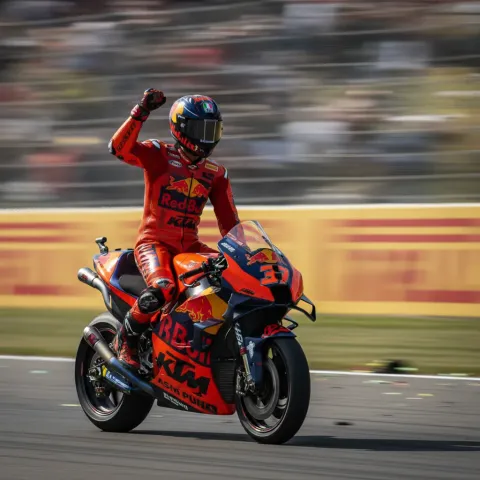
KTM's Pedro Acosta has undergone successful surgery for Carpal Tunnel Syndrome on his right wrist after retiring from the Dutch GP, but expects to be fit for Germany.
Independent fan site — not affiliated with MotoGP or MotoGP Sports Entertainment Group (formerly Dorna). Written by AI from official data and fact-checked: how this article was made.
On this page · 7 sections
Red Bull KTM Factory Racing’s electrifying young rider, Pedro Acosta, has successfully undergone surgery on his right wrist. The procedure was to treat an issue that forced him to stop racing during the recent Dutch Grand Prix at the famous Assen circuit.
While any surgery sounds serious, the team has confirmed the operation went well. The young Spanish star is already focused on his recovery and is expected to be back on his bike for the very next race, the German Grand Prix.
What happened at the Dutch Grand Prix?
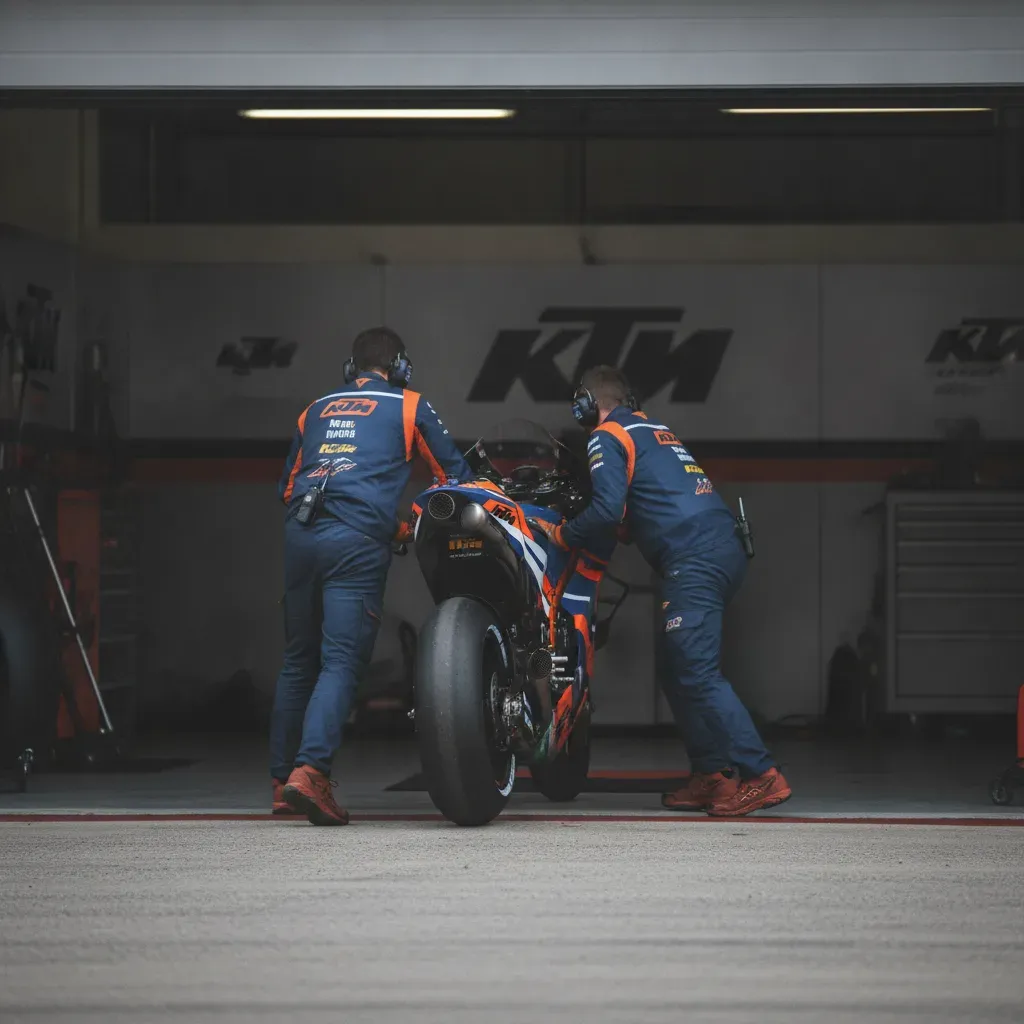
During the race at Assen, Acosta was running well inside the top ten before he suddenly slowed and returned to his garage. This is known as ‘retiring’ from the race. Instead of crashing or having a technical problem with the bike, Acosta was forced to stop due to a physical issue.
He reported feeling a problem with his right hand, making it impossible to control his incredibly powerful MotoGP machine safely. For a rider, the connection between their hands and the bike’s controls is everything, and any loss of feeling or strength is a major safety concern.
What is Carpal Tunnel Syndrome?
After the race, Acosta was diagnosed with Carpal Tunnel Syndrome. In simple terms, this is a condition where a key nerve that runs through your wrist gets squeezed or compressed. This nerve controls the feeling and movement in your thumb and first few fingers.
When the nerve is pinched, it can cause numbness, tingling, and weakness in the hand. Imagine trying to precisely control the throttle for acceleration or delicately squeeze the front brake lever to slow down from over 200mph, but your hand feels weak or numb. It’s an impossible and dangerous task, which is why Acosta had no choice but to retire.
Why is this a common issue for riders?
This might seem like a strange injury, but it’s a known problem for top-level motorcycle racers. The physical demands of wrestling a 160kg MotoGP bike around a track for 45 minutes are immense. Riders are subjected to intense vibration through the handlebars and have to cope with enormous braking forces that put huge strain on their hands, wrists, and forearms.
The constant, repetitive, and forceful movements required to control the bike can lead to inflammation and swelling inside the wrist, which in turn squeezes that crucial nerve. Several other riders on the grid have had similar surgery in the past; it’s seen as an occupational hazard for these elite athletes.
What does this mean for his championship?
For a rider in only his second season, Pedro Acosta has been nothing short of sensational, immediately fighting with the most experienced riders in the world. Retiring from the Dutch GP means he scored zero points, which is always a setback in the season-long championship battle.
However, the good news is that the problem has been identified and treated quickly. By returning for the next race in Germany, he can minimise the damage to his points total. In a long season, managing physical issues and recovering quickly is just as important as being fast on the track.
When will he be back on the bike?
The surgery was declared a success, and the recovery time for this kind of procedure is usually short. Both Acosta and his KTM team are confident that he will be fit enough to compete at the German Grand Prix at the Sachsenring circuit.
This gives him a small window of just under two weeks to rest and recover before he has to tackle one of the most physically demanding and twisty circuits on the calendar. All eyes will be on the young Spanish star to see how he fares on his return from this minor but necessary medical intervention.
Quick Takeaways
- Pedro Acosta had surgery for Carpal Tunnel Syndrome, a nerve issue in his wrist.
- The condition caused numbness in his hand, forcing him to retire from the Dutch GP at Assen.
- This is a common issue for MotoGP riders due to the extreme physical forces involved in racing.
- The surgery was successful, and Acosta is expected to be fit for the next race in Germany.
Quick questions
- Q.What is Carpal Tunnel Syndrome?
- It's a condition where a nerve in the wrist gets compressed, causing numbness, tingling, and weakness in the hand. It's often caused by strong, repetitive hand movements.
- Q.Why did Pedro Acosta retire from the Dutch GP?
- He experienced a physical problem with his right hand, diagnosed as Carpal Tunnel Syndrome, which made it impossible to control his MotoGP bike safely at high speed.
- Q.Will Pedro Acosta miss the next MotoGP race?
- No. The surgery was successful and the official expectation from both the rider and his Red Bull KTM team is that he will be fit to race at the upcoming German Grand Prix.
- Q.Is this a serious injury for a MotoGP rider?
- While any physical issue is taken seriously, Carpal Tunnel Syndrome is a known and treatable condition for riders. The corrective surgery is relatively common and the recovery is usually quick.