News
Why Bagnaia Starts 13th at the Japanese GP
Two-time MotoGP champion Francesco Bagnaia starts the Japanese GP from 13th after a difficult Friday Practice and narrowly missing out in Q1 qualifying.
Independent fan site — not affiliated with MotoGP or MotoGP Sports Entertainment Group (formerly Dorna).
Two-time MotoGP world champion Francesco Bagnaia faces a difficult task at the Japanese Grand Prix, starting Sunday’s main race from 13th on the grid. For a rider with the Ducati Lenovo Team, who is usually fighting at the front, this is a challenging position that resulted from a tough Friday and a narrow miss in QualifyingThe timed sessions that set the starting order, split into Q1 and Q2 for the front rows.Read the full guide →.
How did this happen?
A MotoGP weekend is structured so that Friday’s performance has a big impact on Saturday’s qualifying. During the afternoon PracticeSessions before qualifying where riders set up the bike; the top ten in Friday afternoon's Practice go straight to Q2.Read the full guide → session, all riders aim to set the fastest single lap time they can. The ten quickest riders at the end of this session earn a direct ticket to the main qualifying shootout, called Q2.
Unfortunately for Bagnaia, he could only manage the 16th fastest time on Friday at the Mobility Resort Motegi circuit. This meant he missed out on an automatic spot in Q2, forcing him into the first, more competitive part of qualifying. This highlights how crucial it is to be on the pace from the very start of the race weekend. You can learn more about how these sessions work in our guide to MotoGP Practice.
What is Q1 and why was he in it?
Because he was outside the top ten on Friday, Bagnaia had to take part in Qualifying 1 (Q1). This is a tense, 15-minute session for all the riders who were 11th fastest or slower in Practice. From this group, only the two fastest riders get to advance and join the ten who are already waiting in Qualifying 2 (Q2).
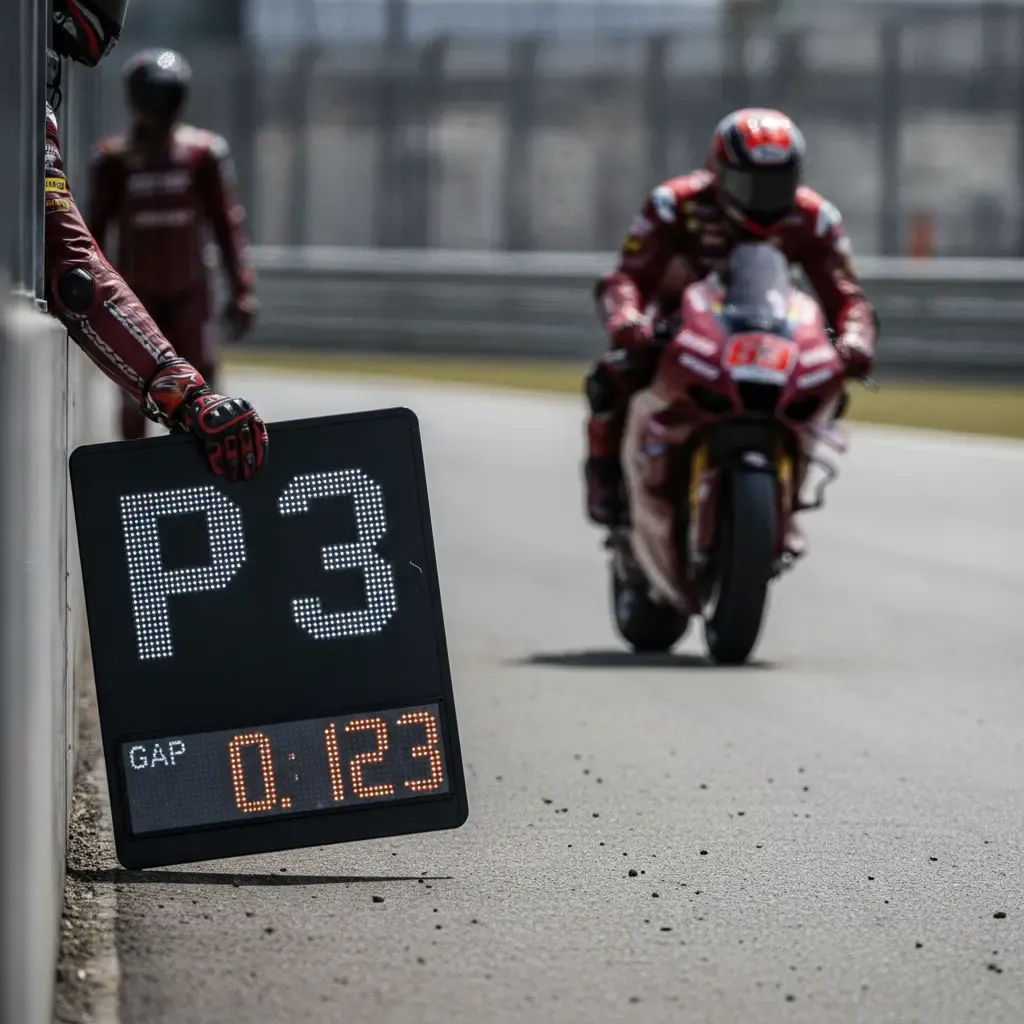
The rest of the Q1 field have their grid positions decided right there and then, filling out the grid from 13th place downwards based on their lap times. Bagnaia finished the session in third place, just one position away from making it through. This result locked him into 13th on the grid for both the Saturday Sprint raceA short Saturday race over half the distance, awarding points to the top nine finishers.Read the full guide → and the main Sunday Grand Prix. For a detailed breakdown, see our guide on how MotoGP qualifying works.
What happened in the Saturday Sprint?
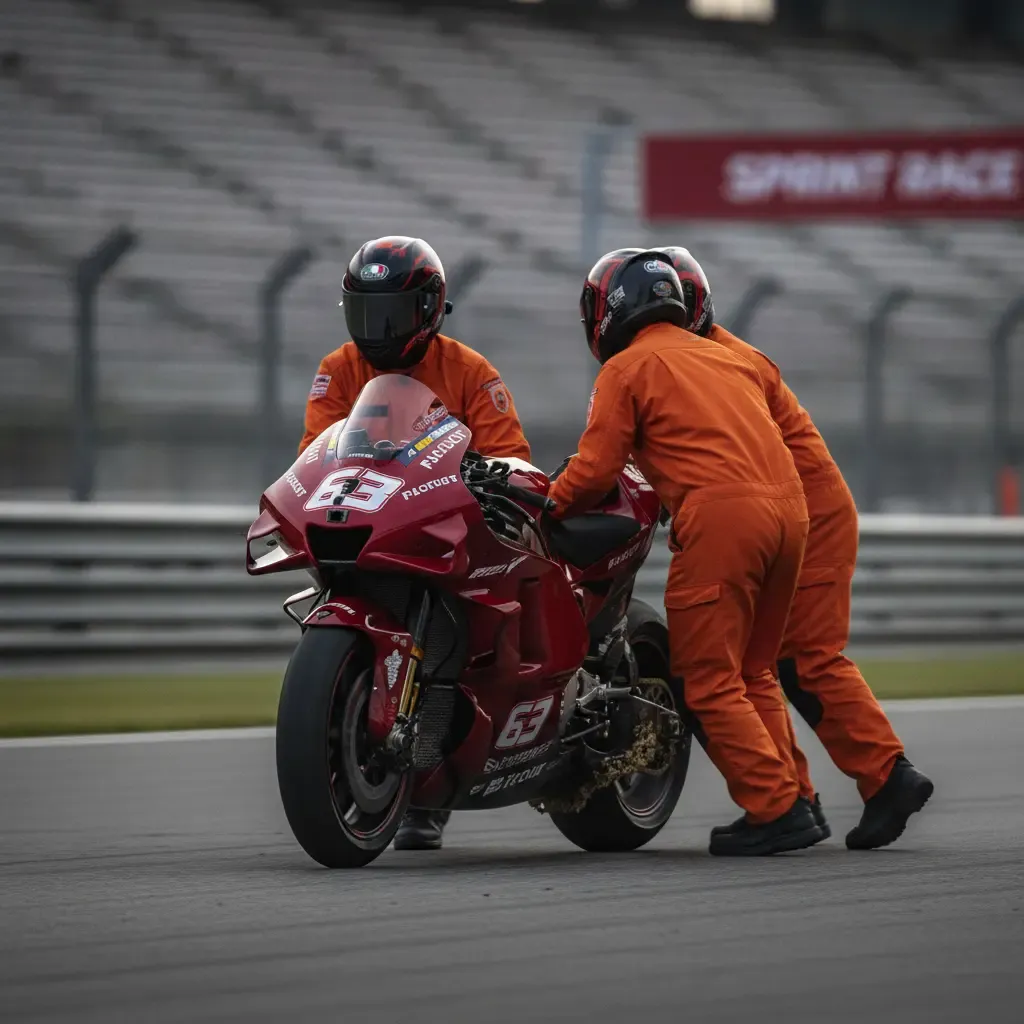
To make a difficult weekend even tougher, Bagnaia also failed to finish Saturday’s Sprint race. The Sprint is a shorter, half-distance race held on Saturday afternoon that offers valuable championship points for the top nine finishers.
His non-finish meant he came away with zero points from Saturday’s action. This was a missed opportunity to recover some ground and gain confidence ahead of the main race. It also gives his rivals, many of whom are starting much further up the grid, another advantage.
Why is starting 13th such a problem?
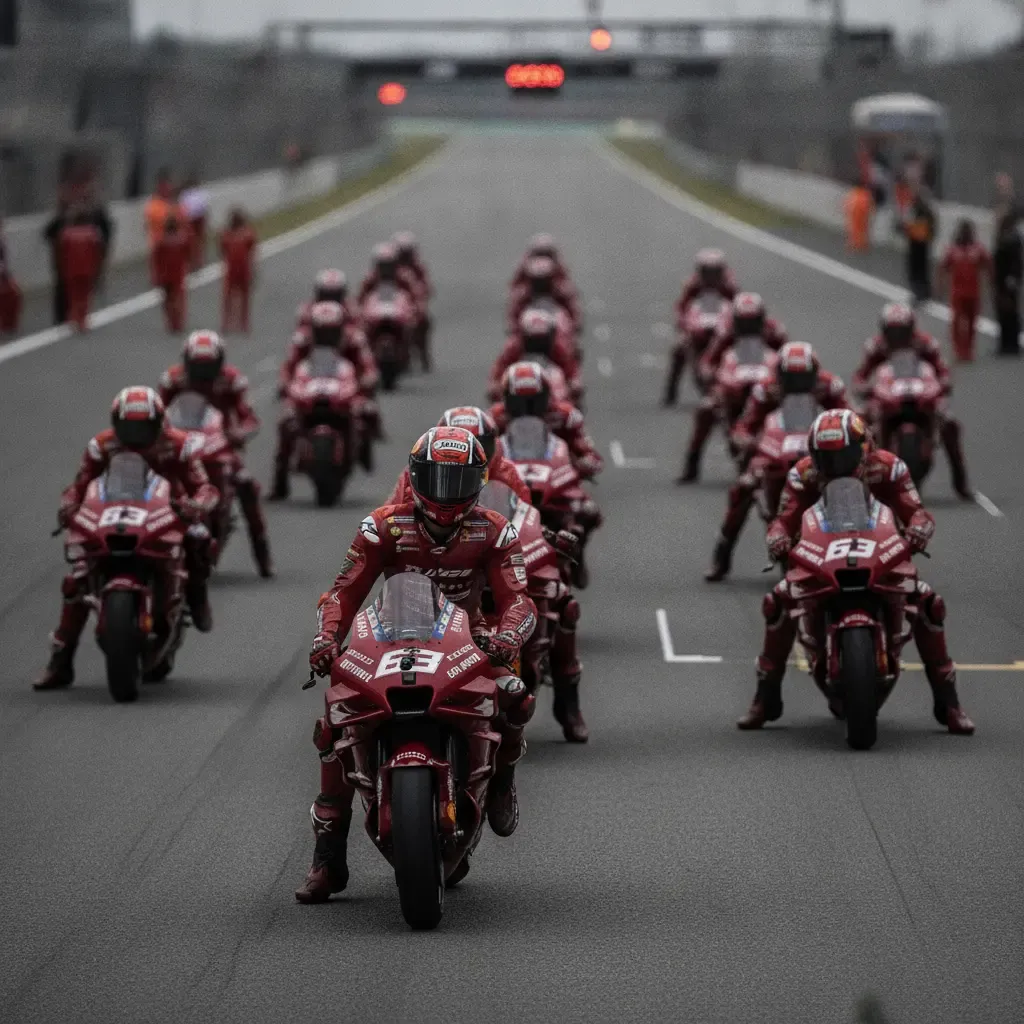
Starting from the middle of the pack in MotoGP is a serious disadvantage. The start of a race is often chaotic, and being surrounded by so many other bikes on the run into the first corner significantly increases the risk of getting caught up in another rider’s mistake.
Even if a rider gets a clean start, they then have to fight their way through traffic. Overtaking is extremely difficult at this level, and each pass takes time and carries risk. While Bagnaia is trying to pass slower riders, the leaders at the front of the race are in clear air and can pull away, building a gap that can become impossible to close. Modern MotoGP bikes also create turbulent air behind them, which can upset the balance of a following bike and make it harder to get close enough to overtake.
What does this mean for his championship?
This poor starting position is a setback for Bagnaia’s 2026 season. Currently ninth in the rider standings, he is already a long way behind championship leaders Jorge Martin and his own teammate, Marc Marquez. To have any chance of closing that significant points gap, he needs to be consistently finishing on the podium.
Starting from 13th makes scoring a large number of points in Sunday’s Grand Prix a very demanding challenge. He will need a strong start and excellent race pace to fight his way through the field and salvage a good result from a weekend that has, so far, not gone his way.
Quick Takeaways
- Francesco Bagnaia will start the Japanese Grand Prix from 13th position.
- He missed direct entry to Q2 after finishing 16th in Friday’s Practice session.
- In the Q1 qualifying session, he finished third, just one place short of the two spots needed to advance.
- A non-finish in the Saturday Sprint meant he scored no points and lost more ground to his rivals.
- Starting mid-pack makes the main race much harder due to traffic and the risk of incidents on the opening lap.
Quick questions
- Q.Who is Francesco Bagnaia?
- Francesco Bagnaia is an Italian rider for the factory Ducati Lenovo Team. He is a two-time MotoGP World Champion, having won the title in 2022 and 2023.
- Q.Why did Bagnaia have to compete in Q1 qualifying?
- He had to compete in Q1 because he finished 16th in Friday's Practice session. Only the top ten riders from that session get to advance directly to the final qualifying session, Q2.
- Q.What is the difference between Q1 and Q2?
- Q1 is the first part of qualifying for riders who were outside the top 10 in Practice. Only the fastest two from Q1 advance to Q2, where they join the top 10 from Practice to fight for the top 12 grid positions. You can read more in our guide to [how MotoGP qualifying works](/motogp-qualifying-format-q1-q2-explained/).
- Q.How many points did Bagnaia score in the Japanese GP Sprint?
- He scored zero points. The official results confirm he did not finish the Sprint race, which was won by his teammate Marc Marquez.