// Beginner Guides
MotoGP Rider Gear: What They Wear for Safety and Performance
MotoGP rider gear is a high-tech system of leathers, helmets, and armour. Learn how each piece protects riders from injury while also improving their performance on track.
Independent fan site — not affiliated with MotoGP or MotoGP Sports Entertainment Group (formerly Dorna). Written by AI from official data and fact-checked: how this article was made.
On this page · 7 sections
When you watch a MotoGP race, you see riders pushing the limits of physics, leaning at impossible angles and hitting speeds over 215 mph (350 km/h). At that level, a fall isn’t a matter of ‘if’, but ‘when’. This is why the gear they wear is one of the most advanced and crucial parts of the entire sport.
This equipment isn’t just about surviving a crash; it’s a sophisticated system designed for both ultimate safety and peak performance. Every single item, from the helmet down to the boots, is a piece of cutting-edge technology that allows a rider to focus entirely on racing.
What is the one-piece suit made of?
The most visible piece of gear is the one-piece suit, often simply called ‘leathers’. These are not your average motorcycle jacket and trousers; they are custom-made for each rider, fitting like a second skin to ensure it doesn’t flap around at high speed or get twisted in a crash.
Most top-level suits are made from kangaroo leather. While this might sound unusual, it’s chosen because it offers incredible abrasion resistance (the ability to withstand being scraped along the tarmac) while being lighter and more flexible than traditional cowhide. The suit also features stretchy, breathable panels in non-impact areas like the inner arms and legs to help with movement and cooling.
Look closely and you’ll see a large hump on the back. This is primarily for WingletsSmall wings on the bodywork that create downforce to keep the front wheel down and improve stability.Read the full guide →, helping the air flow smoothly over the rider’s back when they are tucked in on the straights. It also provides some extra protection and often houses the complex electronics for the suit’s airbag system.
How does the suit protect the rider?
Beneath the leather exterior lies a network of high-tech armour. Hard, CE-rated protectors (meaning they meet specific European safety standards) are built into the shoulders, elbows, hips, and knees. These are designed to absorb and distribute the force of an impact.
The most important safety innovation in recent years is the integrated airbag system. Tiny sensors in the suit constantly monitor the rider’s movements. If they detect the tell-tale signs of a crash—a sudden, violent motion that isn’t part of normal riding—the system instantly inflates an airbag inside the suit in just a few milliseconds, well before the rider hits the ground. This provides crucial protection to the collarbones, shoulders, and chest.
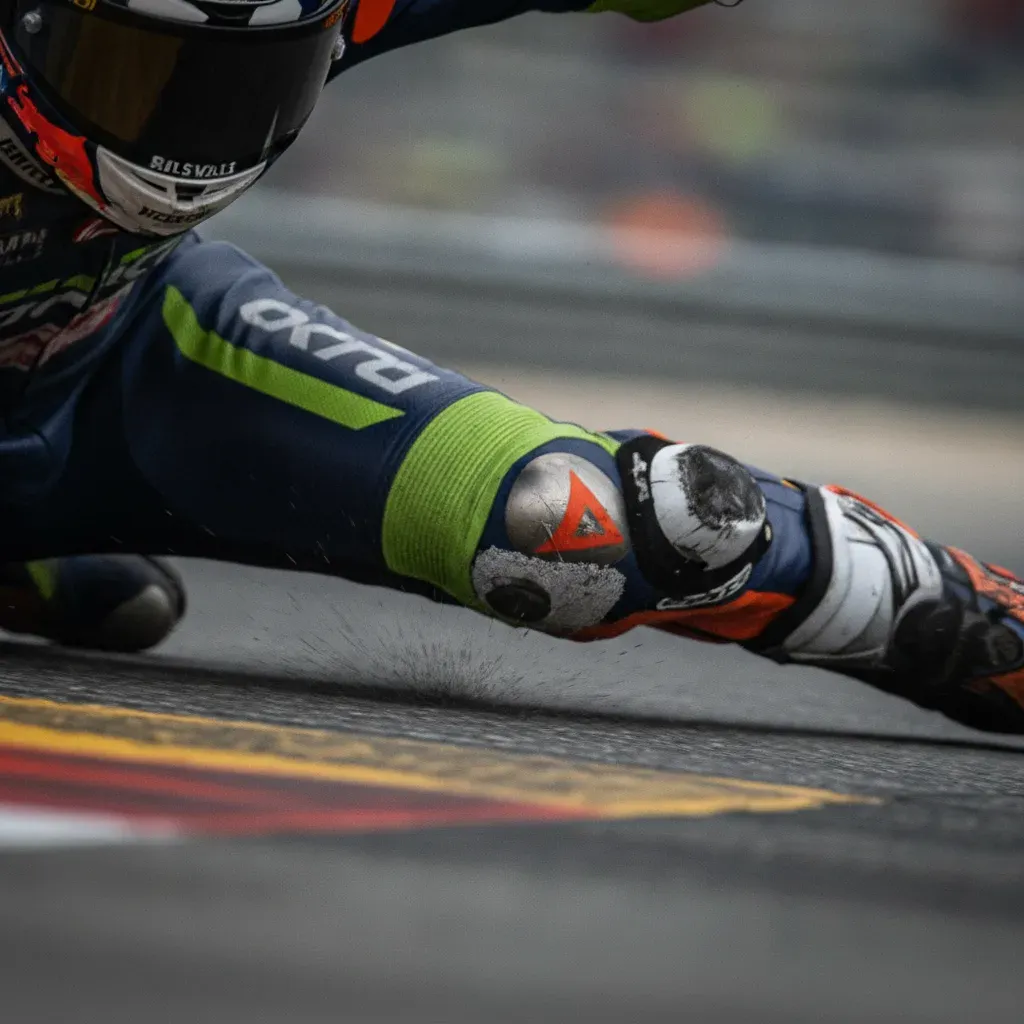
You will also notice the plastic pucks on the outside of the rider’s knees. These are called ‘knee sliders’. They are made of a hard compound and are designed to make contact with the track during extreme Lean angleHow far the bike is tipped from vertical through a corner — MotoGP riders pass 60°.Read the full guide →, allowing the rider to use their knee as a gauge without damaging the expensive leather suit. They are designed to be worn out and are easily replaced.
Why is the helmet so important?
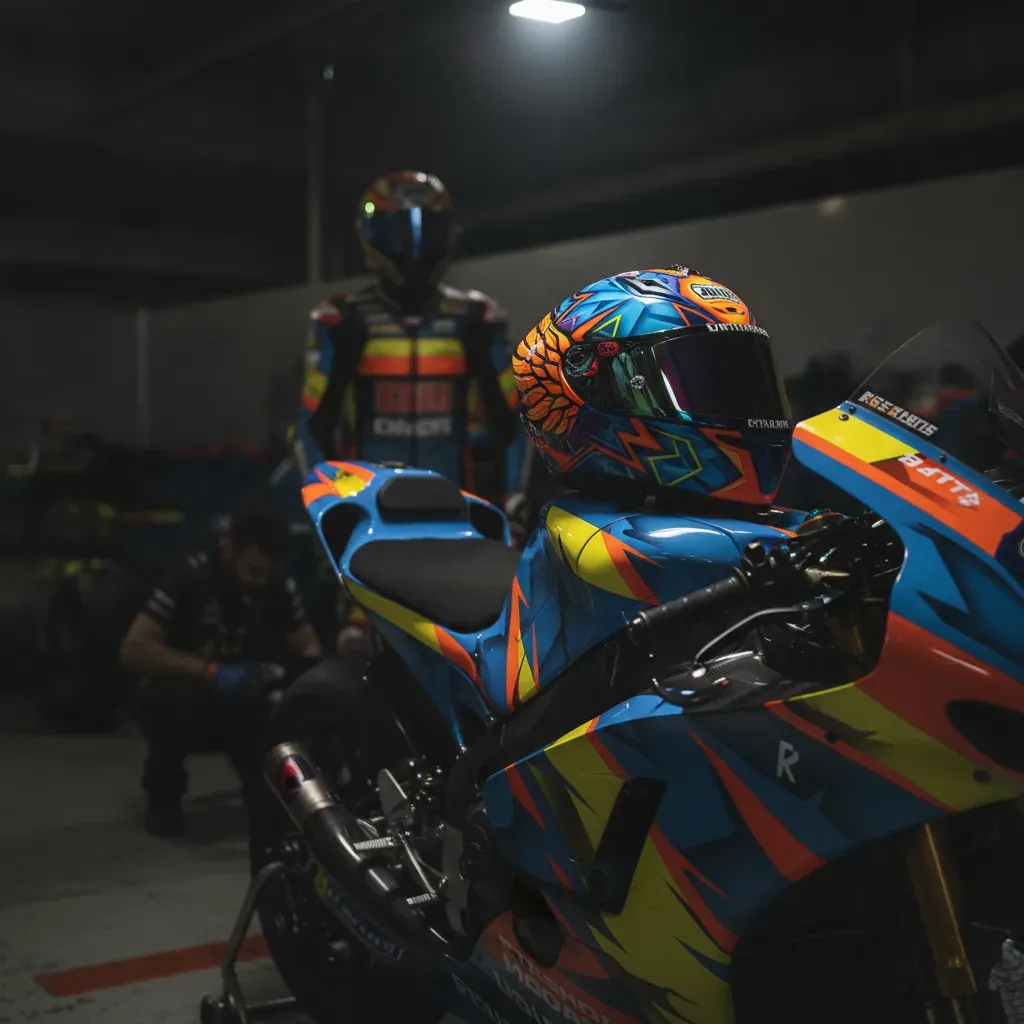
A rider’s head is their most vulnerable asset, and the helmet is the single most critical piece of safety equipment. MotoGP helmets are miracles of material science, designed to be incredibly strong yet as lightweight as possible to reduce strain on the rider’s neck muscles.
The outer shell is typically made from advanced composite materials like carbon fibre and aramid. This hard shell is designed to spread the force of an impact over a wide area and resist being pierced. Inside, a thick layer of expanded polystyrene (EPS) foam acts as a shock absorber, compressing to slow the rider’s head down more gently during an impact.
Every helmet used in the championship must be approved by the sport’s governing body, the FIM, passing a series of rigorous tests that go far beyond standard road helmet requirements. The visors also feature ‘tear-offs’—thin, transparent plastic layers that a rider can pull off one at a time during a race to instantly clear their vision of rain, insects, or dirt.
What about boots and gloves?
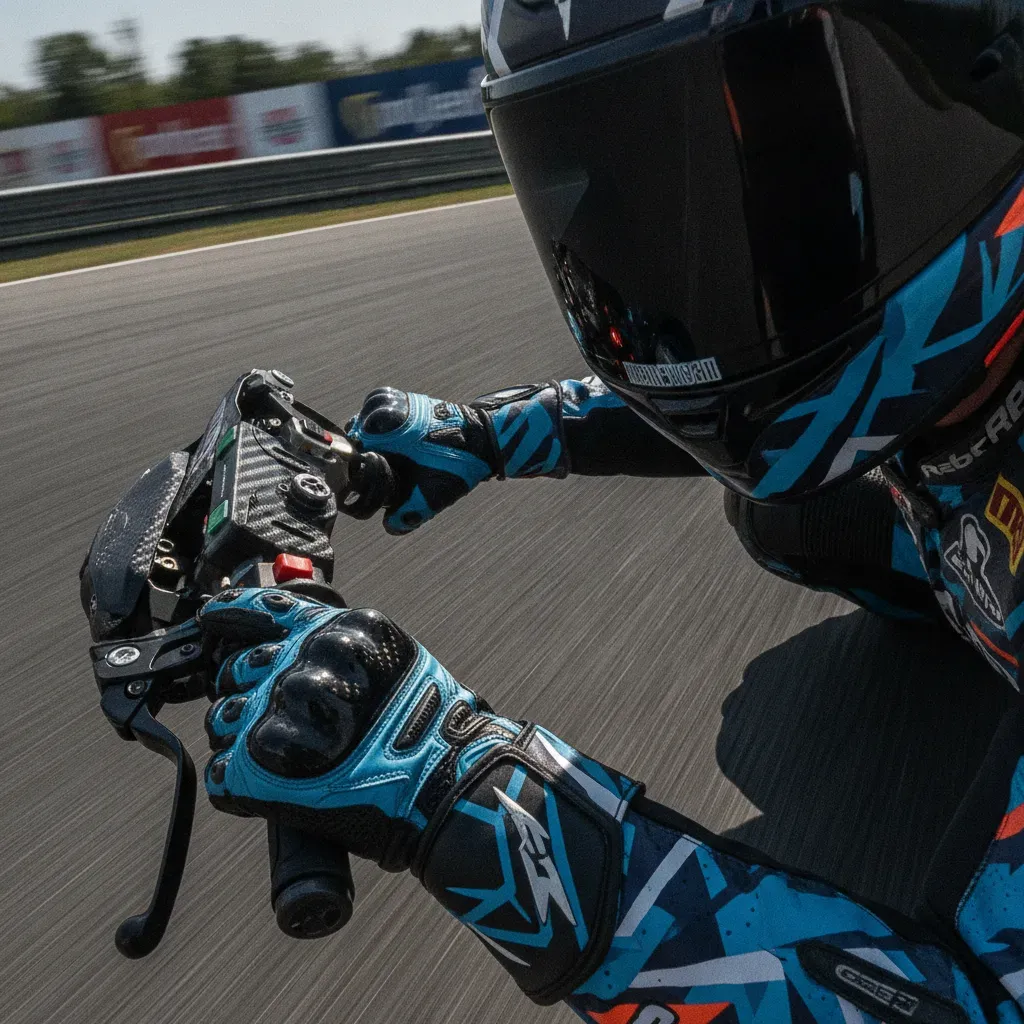
A rider’s hands and feet are essential for controlling the bike, but they are also highly exposed in a crash. MotoGP gloves and boots are therefore a masterclass in balancing protection with feel and flexibility.
Gloves are made from tough leather and feature carbon fibre or plastic armour across the knuckles and fingers. Many designs also connect the little finger to the ring finger with a small leather bridge. This helps to prevent the little finger from being bent back and broken, a common injury in motorcycle accidents.
Boots are equally complex. They extend high up the shin and contain an inner bracing system to prevent the ankle from twisting or over-extending, while still allowing the precise movements needed to operate the rear brake and gear lever. They also have replaceable sliders on the toes and sides for when they scrape along the track during cornering.
Is there anything else they wear?
Yes. Underneath the leathers, all riders wear a separate back protector, a long piece of articulated armour that shields the spine from impact, and a chest protector. Both are compulsory under the championship’s safety rules.
Against their skin, riders wear a thin base layer, or ‘undersuit’. This is made from technical, sweat-wicking fabric. It helps to regulate body temperature in the intense heat of a race and also makes the incredibly tight leather suit much easier to slide on and off.
Quick Takeaways
- MotoGP gear is a high-tech system for both safety and performance, not just a collection of individual items.
- The leather suit contains hidden armour and a sophisticated airbag that inflates in milliseconds before a rider hits the ground.
- Helmets are made from advanced, lightweight materials like carbon fibre and feature ‘tear-off’ strips on the visor for clear vision.
- Every piece, from boots to gloves, is a specialised blend of rigid protection and the flexibility needed to control the bike at the limit.
Quick questions
- Q.Do MotoGP riders wear the same suit all weekend?
- No, they usually have several identical suits. This is in case one gets damaged in a crash or simply to have a fresh, dry suit for different sessions.
- Q.How much does a full set of MotoGP gear cost?
- While exact figures are not public, a top-level, custom-made airbag suit, helmet, and accessories can cost well over £10,000. These are not off-the-shelf items.
- Q.What is the 'hump' on the back of the suit for?
- The aerodynamic hump helps air flow smoothly over the rider's back when tucked in at high speed. It can also house the electronics for the airbag system and sometimes a small hydration pack.
- Q.Are the airbag suits reusable after a crash?
- Yes, in many cases. If the suit itself isn't badly damaged, the airbag system can be reset and recharged by the manufacturer's technicians at the track, ready for the next session.