// News
MotoGP Bans Front Ride-Height Devices and Adjusts Grid Spacing for Safety
MotoGP has boosted rider safety by immediately banning front ride-height devices and increasing the spacing between rows on the starting grid.
Independent fan site — not affiliated with MotoGP or MotoGP Sports Entertainment Group (formerly Dorna). Written by AI from official data and fact-checked: how this article was made.
On this page · 8 sections
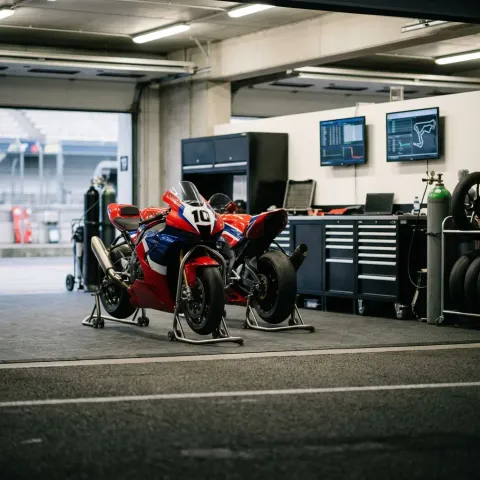
MotoGP’s rule-makers have introduced two significant changes aimed at improving rider safety. In a recent announcement, they confirmed an immediate ban on front Ride-height deviceA system that lowers the bike on corner exit and straights for better drive and lower drag. Banned from 2027.Read the full guide → and an increase in the spacing between bikes on the starting grid.
These adjustments address key concerns raised by the riders themselves and are designed to reduce risk during one of the most critical phases of any race: the start.
What exactly has been banned?
The first major change is the immediate ban of all front ride-height devices. These are clever mechanical systems that allow a rider to temporarily lower the front end of their motorcycle, almost always used for the race start.
By lowering the bike’s centre of gravity, the device helps to stop the front wheel from lifting off the ground—an effect known as a ‘wheelie’—under fierce acceleration. This allows the rider to use more power and get a much faster launch off the starting line.
This ban is effective from the Dutch Grand Prix at the famous Assen circuit.
Why was this device a safety concern?
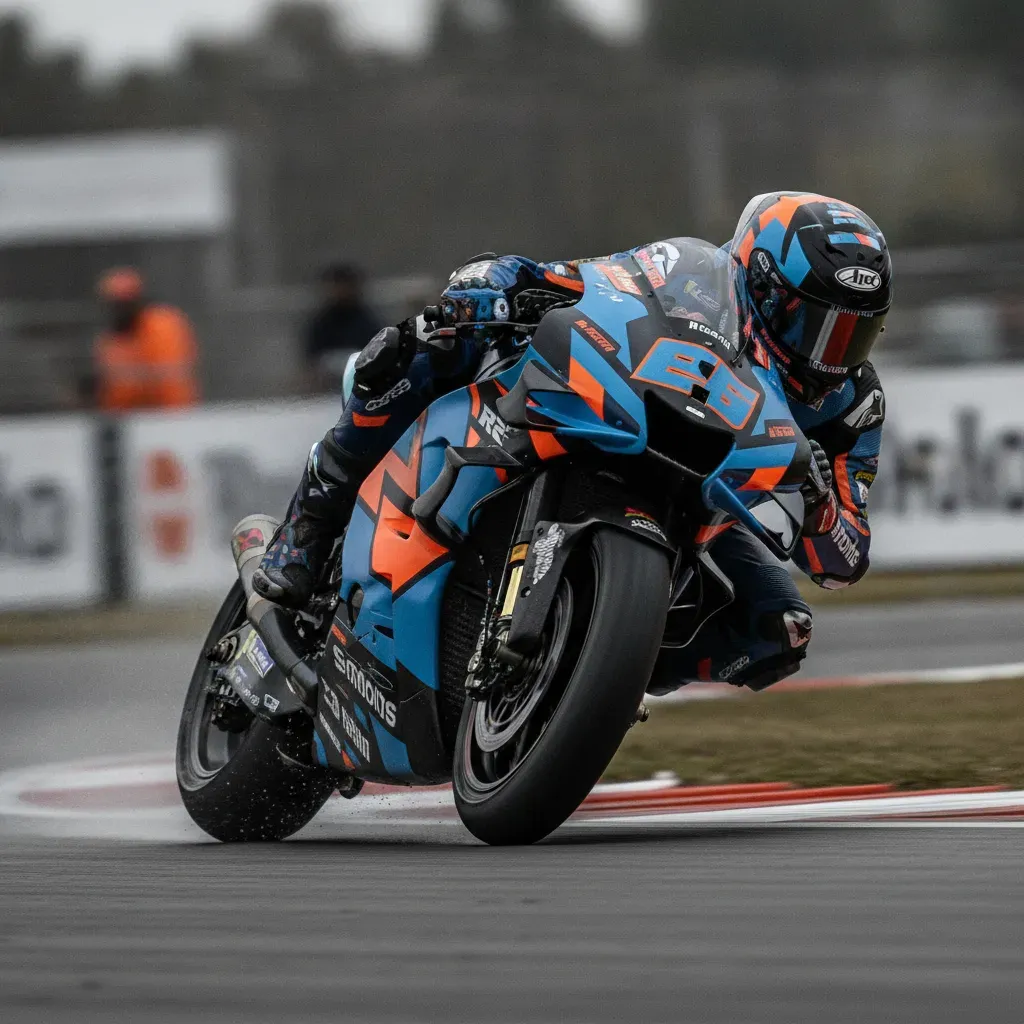
While brilliant from an engineering point of view, the front ride-height device came with risks. The primary concern was what might happen if the system failed to work correctly, potentially getting stuck in the lowered position as the rider approached the first corner at over 100 mph.
A bike with its front end locked down would have severely compromised handling and braking, making it incredibly difficult to control. In the crowded chaos of a race start, with 22 bikes charging into the same corner, any mechanical failure poses a huge danger to the entire field.
The decision to ban the device removes this potential variable, ensuring the bikes are in a more predictable and stable state during the frantic opening moments of a race.
Are all ride-height devices banned?
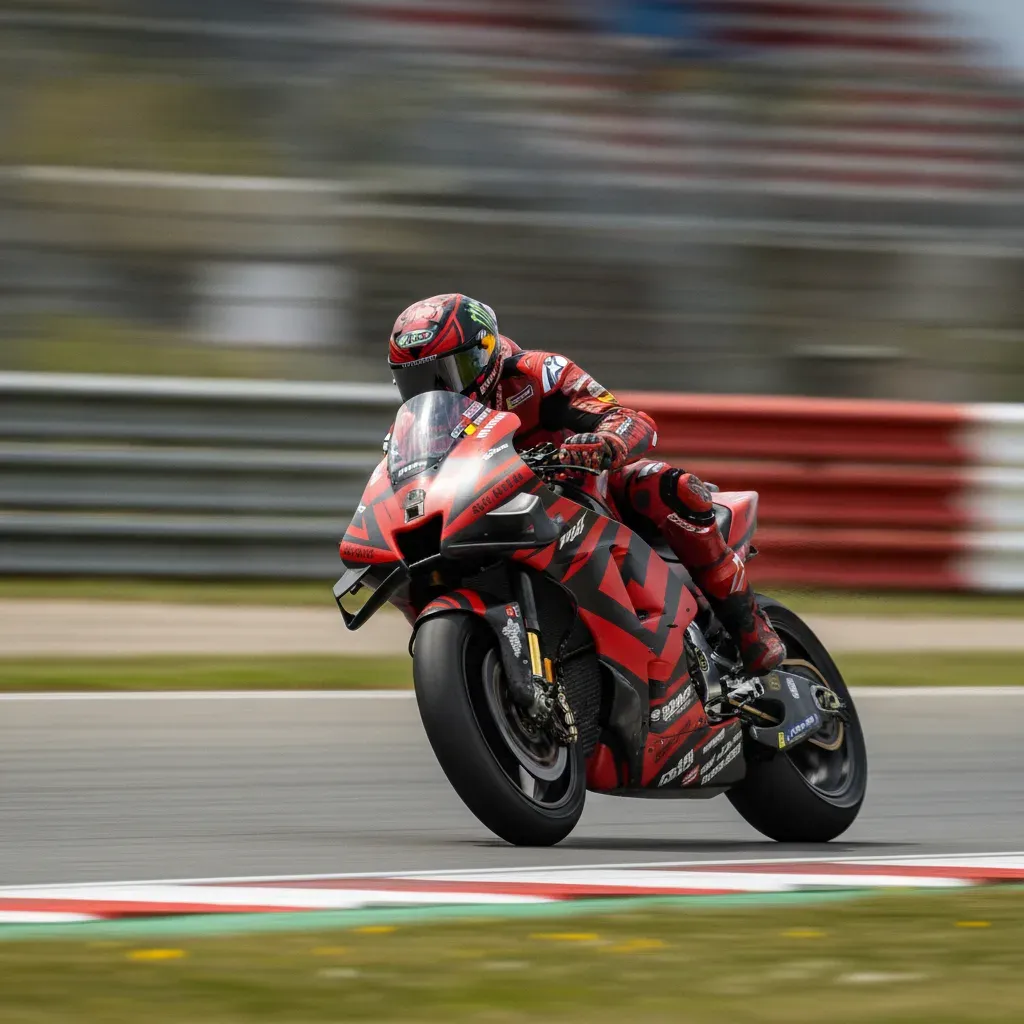
It’s important to note that this ban only applies to the front device. You will still see riders using a rear ride-height device, which is a separate system that lowers the back of the bike.
This rear system is typically used when accelerating out of corners. Lowering the rear squats the bike down, pushing the back tyre into the tarmac. This creates more grip and allows the rider to apply the throttle earlier and harder without the wheel spinning.
The rear ride-height device has become a standard piece of technology on all MotoGP bikes and remains perfectly legal.
What is changing on the starting grid?
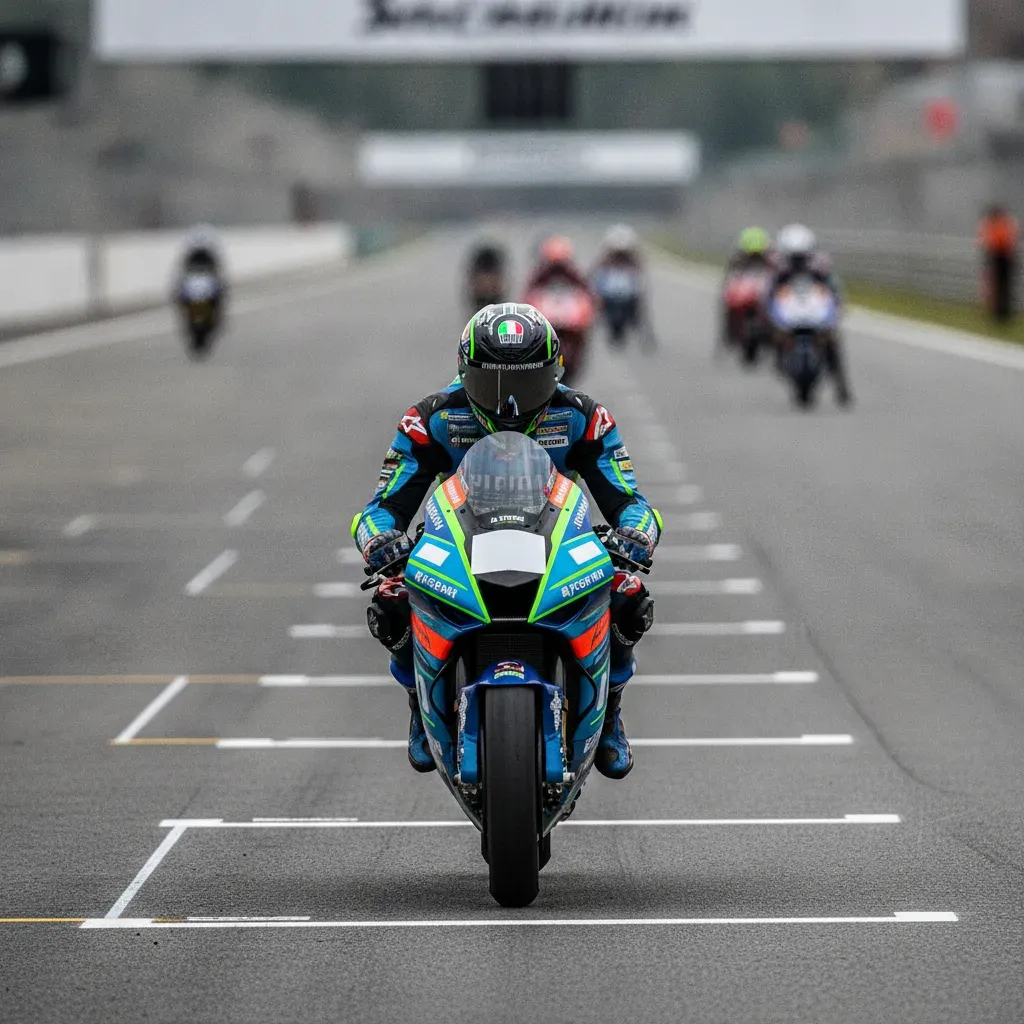
The second safety update focuses on the starting grid itself. The staggered gap between each grid position will grow from three metres to four, which stretches the distance between each three-rider row from nine metres to twelve.
This change will be implemented from the German Grand Prix at the Sachsenring. It might not sound like a huge difference, but those extra three metres between the row in front and the row behind are a simple but effective safety improvement.
How will more space on the grid help?
That extra space provides a crucial split-second of extra reaction time. If a rider on the row ahead has a problem, such as stalling their engine or a mechanical issue, the riders behind have slightly more space and time to see the problem and take avoiding action.
It gives everyone a little more breathing room as they launch off the line, slightly reducing the initial congestion as the field accelerates towards the first turn. In a sport of fine margins, this small adjustment can make a big difference in preventing chain-reaction incidents at the start.
What does this mean for the racing?
For a new fan, these changes might not be immediately obvious when you watch a race, but they are important for the riders’ welfare. The ban on the front device means race starts will now rely more on pure rider skill to control wheelies, just as they did a few years ago.
The wider grid spacing is a subtle background change that you likely won’t notice, but it contributes to making the sport safer. Ultimately, both rules are proactive steps by MotoGP to manage the risks that come with pushing racing technology to its absolute limits.
Quick Takeaways
- MotoGP has banned front ride-height devices for safety, effective immediately.
- These devices helped bikes launch faster but carried risks if they failed during the crucial race start.
- Rear ride-height devices, which help with corner-exit grip, are still allowed.
- The space between grid rows is increasing from nine to twelve metres to give riders more reaction time.
- Both changes are designed to make the start of the race safer for all competitors.
Quick questions
- Q.What was a front ride-height device in MotoGP?
- It was a system that allowed a rider to temporarily lower the front of their bike, mainly to get a faster start by helping to prevent the front wheel from lifting under acceleration.
- Q.Is the rear ride-height device also banned?
- No, the rear device, which lowers the back of the bike for better grip when accelerating out of corners, is still legal and widely used by all teams.
- Q.Why is more space on the starting grid safer?
- The extra space between grid positions gives riders more time and space to react and avoid a collision if a bike ahead stalls or has a problem right at the start of the race.
- Q.When do these new MotoGP rules take effect?
- The ban on the front ride-height device is effective from the Dutch Grand Prix, while the new grid spacing rule begins at the German Grand Prix.