News
A Season of Surprises: Five Different Winners in the 2026 MotoGP Championship So Far
The 2026 MotoGP season is proving incredibly unpredictable, with five different riders from various teams winning in the first ten races of the championship.
If you’ve just started following MotoGP, you’ve picked a brilliant time to join. The 2026 season has been a rollercoaster of surprises, with the first ten races producing five different winners. This isn’t just exciting; it tells us that the world’s premier motorcycle racing championship is more competitive than ever.
Instead of one or two riders dominating every weekend, the top step of the podium has been shared among a wide group of talented individuals on different machinery. This level of variety makes each race weekend a must-see event, as the winner is genuinely hard to predict.
What makes this season so unpredictable?
The simple answer is that the level of competition is incredibly high across the entire grid. The performance gap between the different bikes from manufacturers like Ducati, Aprilia, and KTM has become smaller, meaning more riders have a realistic chance of fighting for victory.
We’re also seeing that different rider and bike combinations excel at different circuits. A bike that performs well on the long, fast straights of one track might not have the same advantage at a circuit with tight, twisty corners. This variety in track layouts plays a huge role in shaking up the results from one week to the next.
Crucially, it’s not just the official ‘factory teams’—those run directly by the manufacturer—that are winning. We are also seeing victories from ‘independent teams’, who lease their motorcycles from the manufacturers. When these teams start winning, as Trackhouse Racing did at the Dutch TT in Assen, it proves just how close the entire field has become.
Who are the winners so far?
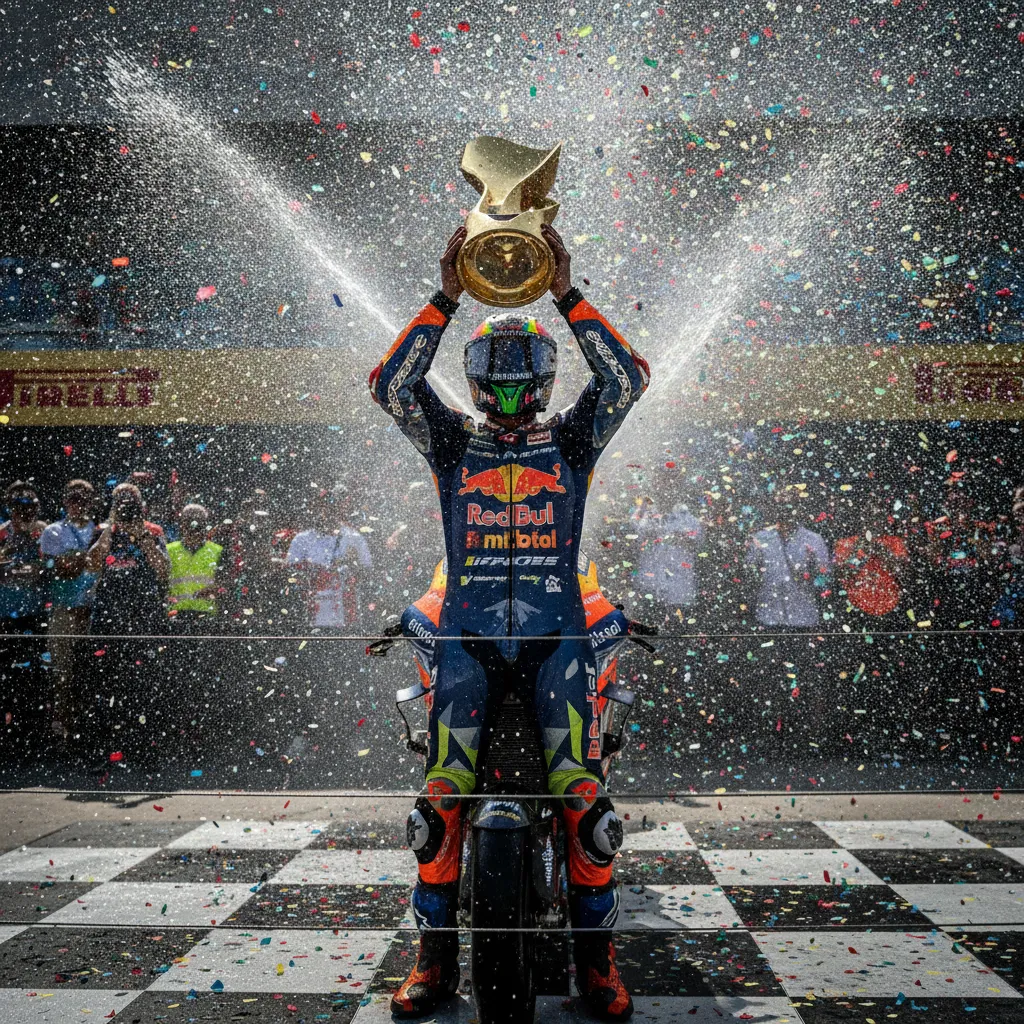
While the list of winners includes some of the sport’s established champions, the real story is the diversity of those standing on the top step. The victories have been spread across riders from different teams and manufacturers, highlighting a major shift away from the dominance of just one or two big names.
Having multiple winners keeps the championship fresh and engaging. Each victor brings a new story to the season, whether it’s a seasoned veteran finding their form again, a young star claiming their first win, or an underdog from an independent team defying the odds. This variety is a clear sign of a healthy and highly competitive sport.
How does this affect the championship fight?
The MotoGP World Championship is decided by points. Riders are awarded points based on where they finish in each race, and the rider with the most points at the end of the season is crowned champion. With so many different winners, those crucial top-scoring points are being shared around.
This prevents any single rider from building a massive, unassailable lead in the championship standings (the official leaderboard of rider points). The result is a much closer and more thrilling title battle that will likely go down to the final few races of the year. Every point matters, and a single mistake or a brilliant performance can completely change the championship picture.
This intense competition is heightened by the weekend format. Most race weekends now feature two races: the Sprint raceA short Saturday race over half the distance, awarding points to the top nine finishers.Read the full guide → on Saturday, which is a shorter dash, and the main Grand Prix on Sunday. With points awarded for both, there are more opportunities for riders to score, but also more chances for things to go wrong, keeping the standings tight.
What does this mean for a new fan?
For someone new to MotoGP, this season is the perfect introduction. You are witnessing a golden era of competition where anything can happen. You don’t need to know decades of history to understand the excitement of seeing an underdog take on the giants and win.
Every race weekend offers a fresh start and a genuine sense of anticipation. It’s a fantastic opportunity to get to know a wide range of riders and teams, find a favourite, and follow their journey through a championship that is wide open. The unpredictable nature of the 2026 season is what makes it such a compelling spectacle.
Quick Takeaways
- The 2026 MotoGP season is highly competitive, with five different winners in the first ten races.
- Victories are being shared between official factory teams and independent teams, showing the depth of talent on the grid.
- With points being spread among many riders, the championship title fight is extremely close and exciting.
- The unpredictable results make it a brilliant and easy-to-follow season for new fans of the sport.
Quick questions
- Q.What is an 'independent team' in MotoGP?
- An independent team, sometimes called a satellite team, is a private racing team that leases its motorcycles and technical support from one of the main manufacturers (like Ducati, Aprilia, or KTM), rather than being a full factory-run effort.
- Q.How many races are in a MotoGP season?
- A typical MotoGP season consists of around 20-22 race weekends, known as Grands Prix, held at different circuits around the world. The exact number can vary slightly each year.
- Q.How do points work in MotoGP?
- Points are awarded to the top 15 finishers in the main Grand Prix race, with 25 for first, 20 for second, and so on. Points are also awarded to the top 9 finishers in the shorter Saturday Sprint race, with 12 for the winner.
- Q.Why do some bikes perform better at certain tracks?
- Each motorcycle has unique characteristics. Some are built for top speed on long straights, while others excel in agility and turning in tight corners. This means a bike's strengths might perfectly match one circuit's layout but be a disadvantage at another.